Documents for Italy: Passport, Visa, Travel Insurance & What to Bring
Paperwork First. Then Pack.
Most people overthink the documents for Italy. Then they arrive and realize they forgot to check if their passport expires in 3 months — and EU countries require 3-6 months validity beyond your travel dates.
This is the complete list. Sorted by what actually matters.
Passport: The Foundation
You need a valid passport. ID cards are not accepted for non-EU nationals.
Expiry check: Your passport must be valid for at least 3 months beyond your planned departure date from the Schengen Area. Italy is Schengen.
Example: If you leave Italy on October 15, your passport must be valid until at least January 15.
If your passport expires soon: Apply for renewal 6-8 weeks before your trip. Many countries have expedited services for an extra fee.
Passport photo in the app: Some countries let you take passport photos with apps (UK: HM Passport Office tool). Check your country's requirements.
Visa: Who Needs One
EU citizens: No visa needed. Your national ID card works for travel within the EU. No passport even required.
Schengen-exempt countries (no visa for stays up to 90 days in 180):
- USA, Canada, Australia, New Zealand
- UK (post-Brexit — still visa-free for tourism)
- Japan, South Korea, Singapore
- Most Latin American countries (Argentina, Brazil, Chile, Colombia, Mexico...)
Countries that DO need a visa:
- India, China, Russia, most African countries, some Southeast Asian countries
- Check: ec.europa.eu/home-affairs for the definitive Schengen visa list
ETIAS (coming in 2025-2026): A new EU pre-authorization system (like US ESTA) will be required for currently-exempt countries. It's €7, applied online, valid 3 years. Not yet in force — check current status before your trip.
The 90/180 rule: Even if you don't need a visa, you can only stay in the Schengen Area 90 days out of any 180-day rolling period. Applies to all Schengen countries combined (France + Italy + Spain = one block).
Travel Insurance: Not Optional
You're in Italy. You fall on cobblestones (it happens). You break your ankle. An Italian ER visit: €300-800 without insurance. Ambulance: €300. A flight home with medical escort: €5,000-15,000.
Travel insurance covers:
- Medical emergencies and evacuation
- Trip cancellation (if you have a covered reason)
- Lost baggage and theft
- Flight delays and missed connections
- 24/7 assistance hotline
Who you don't need to buy insurance:
- EU citizens: your EHIC / GHIC card (European Health Insurance Card) covers emergency medical care in Italy at Italian national rates. Free to apply, valid in all EU countries.
- UK travelers: apply for a GHIC (Global Health Insurance Card) — replaced the EHIC post-Brexit, still free, still works in Italy.
Who should buy insurance:
- Non-EU, non-UK travelers: Yes. Get it.
- Everyone for trip cancellation coverage: Consider it.
What good insurance costs:
- 1-2 week Italy trip: €30-60 for a solo traveler
- Reputable providers: World Nomads, AXA, Allianz, your credit card's built-in coverage (check terms)
Credit card travel insurance: Many premium credit cards include travel insurance. Read the fine print — some require you to book flights with that card, some have low medical limits. Know what you have before you rely on it.
The EHIC / GHIC Card (EU & UK Travelers)
Apply before you go. It's free. Takes 5-10 minutes online.
- EU citizens: Apply through your national health authority. The card is plastic, looks like a credit card.
- UK citizens: Apply at nhsbsa.nhs.uk/GHIC
What it covers: Emergency treatment at Italian public hospitals and clinics at the same cost Italians pay (often free or subsidized).
What it does NOT cover: Private hospitals, repatriation flights, trip cancellation, lost baggage. For these, you still need travel insurance.
Practical tip: Italian hospitals are public by default. If you go to a private clinic (clinica privata), the EHIC won't apply. Ask "è una struttura pubblica?" before you register.
Documents Checklist
Must-have:
- Valid passport (3+ months validity beyond your return date)
- Visa (if required for your nationality)
- Travel insurance documents and 24/7 emergency number
- EHIC / GHIC card (EU/UK travelers)
- Hotel/accommodation booking confirmations
- Flight tickets
Recommended:
- Photocopies of passport (leave one at home, carry one separate from original)
- Digital copies in email/cloud (email passport scan to yourself)
- Emergency contacts list (written on paper — phones die)
- ATMS / credit cards (2 different cards minimum)
If driving in Italy:
- International Driving Permit (IDP) — required for non-EU licenses
- Vehicle insurance documents
- Green Card (vignette) for highway tolls if driving to Italy from another country
Download Before You Fly
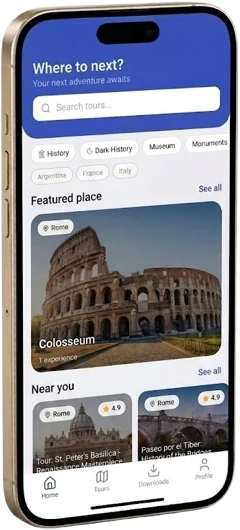
Get Trevurs before you board. The app works offline once you've cached the tours for your destination. Land in Rome, connect to airport Wi-Fi for 5 minutes, download the Rome audio tours, and you're set for the entire trip — no roaming data needed.