French for Travelers: Essential Phrases, Pronunciation & Café Ordering
Why Bother Learning Any French?
Because it changes how locals treat you. France has a reputation for being cold to tourists who don't speak French. That reputation is mostly for people who walk in and immediately speak English without trying.
Saying "Bonjour" when you enter a shop and "Merci, au revoir" when you leave costs nothing and gets you genuine warmth. The bar is low and the reward is high.
You don't need to be fluent. 20 phrases gets you through 80% of situations.
Pronunciation Basics
French pronunciation looks harder than it is. A few rules:
- Silent letters: Most final consonants are silent. "Paris" = Pah-ree (not Par-iss). "Louvre" = Loov-ruh.
- The French "r": Pronounced at the back of the throat, like a gentle gargle. Don't roll it.
- Nasal vowels: "on," "an," "in" are nasal sounds. "Bonjour" = Bon-zhoor (the "n" is barely voiced, makes the vowel nasal).
- "u" sound: Like saying "ee" with your lips rounded forward. "Tu" = like "tyoo" with rounded lips. Different from English "oo".
- "eu": Like "uh" with rounded lips. "Deux" = "duh" with rounded lips.
The most important thing: Even a poor attempt at French pronunciation is received warmly. Trying matters more than getting it right.
Essential Greetings
| French | Pronunciation | English |
|---|---|---|
| Bonjour | Bon-zhoor | Hello / Good morning |
| Bonsoir | Bon-swahr | Good evening |
| Bonne nuit | Bon nwee | Good night |
| Au revoir | Oh ruh-vwahr | Goodbye |
| Salut | Sah-loo | Hi (informal) |
| S'il vous plaît | Seel voo pleh | Please (formal) |
| Merci | Mehr-see | Thank you |
| Merci beaucoup | Mehr-see boh-koo | Thank you very much |
| De rien | Duh ryehn | You're welcome |
| Excusez-moi | Ex-kyoo-zay mwah | Excuse me |
| Pardon | Pahr-don | Sorry / Excuse me |
Rule #1: Always say "Bonjour" (or "Bonsoir" after ~6 PM) before anything else. Walk into a shop, say "Bonjour." Ask for directions, start with "Bonjour." Skip this and you're already off on the wrong foot.
Useful Questions & Phrases
| French | English |
|---|---|
| Où est...? | Where is...? |
| Où sont les toilettes? | Where are the toilets? |
| Combien ça coûte? | How much does it cost? |
| Parlez-vous anglais? | Do you speak English? |
| Je ne comprends pas | I don't understand |
| Pouvez-vous répéter? | Can you repeat? |
| Je voudrais... | I would like... |
| L'addition, s'il vous plaît | The bill, please |
| Une chambre pour... nuits | A room for... nights |
| Avez-vous...? | Do you have...? |
Ordering at a Café
French café culture has rules. Know them.
Entering: Say "Bonjour" to whoever greets you.
Sitting: In most cafés, you can sit where you like. Some have a waiter section (service compris). If in doubt, wait to be seated or ask: "Je peux m'asseoir ici?" (Can I sit here?)
Ordering coffee:
- Un café / Un espresso — a single espresso
- Un café allongé — espresso with hot water (like an americano)
- Un café au lait — coffee with warm milk (morning drink)
- Un cappuccino — exists but ordering it after lunch is unusual
- Un crème — espresso with steamed milk (like a flat white)
Ordering food:
- "Je voudrais..." (I would like...) is polite
- "Un croissant, s'il vous plaît" — works perfectly
- Point if you don't know the word: "Ça, s'il vous plaît" (That, please)
Paying: "L'addition, s'il vous plaît" to ask for the bill. You usually have to ask—waiters don't bring it automatically.
Standing vs sitting: At many Paris cafés, prices are lower at the bar (au comptoir) than at a table. A coffee at the bar: €1.50. At a table: €2.50.
Numbers (for prices and quantities)
| Number | French | Pronunciation |
|---|---|---|
| 1 | un/une | uh/oon |
| 2 | deux | duh |
| 3 | trois | twah |
| 4 | quatre | katr |
| 5 | cinq | sank |
| 6 | six | sees |
| 7 | sept | set |
| 8 | huit | weet |
| 9 | neuf | nuhf |
| 10 | dix | dees |
Respect Tips
- Tutoyez vs Vouvoyer: "Tu" is informal (for friends, children). "Vous" is formal (strangers, older people, service workers). Always use "vous" with strangers unless they use "tu" first.
- Don't shout or gesture dramatically: French communication style is measured. Speaking loudly reads as rude.
- "Excusez-moi" goes a long way: Use it before asking for directions, before interrupting someone, before anything.
- In restaurants: Don't click your fingers or shout "Garçon." Make eye contact and raise your hand slightly.
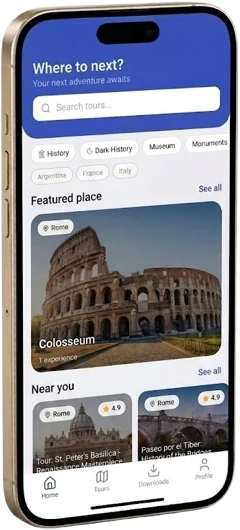
Explore France with Trevurs
Trevurs audio tours are narrated by French locals—so you hear real French as you walk. It's not a language course, but listening to authentic French voices explaining their neighborhood is good exposure.