Beyond Gaudí: Barcelona's Best Neighborhoods to Explore on Foot
Gaudí's landmarks get all the attention, understandably so in 2026, but Barcelona's neighborhoods are where the city actually lives day to day. Each one has a distinct character shaped by its own history - a former fishing quarter, a onetime independent village, a medieval trading district - and all of them reward a slower visit than a single photo stop allows, with a version of the city that has very little to do with Gaudí at all.
El Born: Medieval Streets and Quiet Craftsmanship
El Born's narrow streets, built for medieval trade, now hold a mix of the Picasso Museum, the striking Santa Maria del Mar basilica, and small workshops where artisans still make things by hand - leather goods, ceramics, jewelry - in spaces barely bigger than a single room. It rewards wandering without a fixed plan more than almost anywhere else in the city, and even a wrong turn tends to lead somewhere worth photographing. If you want the history behind what you are walking through, Trevurs has a free audio tour of El Born recorded by people who actually live there, covering both the medieval backstory and what the neighborhood has become since.
Gràcia: A Village That Never Stopped Being One
Gràcia was an independent town until Barcelona annexed it in 1897, and it has never quite let go of that identity. Its small, interconnected plazas - Plaça del Sol, Plaça de la Vila de Gràcia - fill with locals in the evening rather than tourists, and the neighborhood's grid of narrow streets is dense with independent shops, vermuterías, and restaurants that have never bothered courting a tourist crowd. Rents have climbed here in recent years, but the neighborhood's character has proven harder to displace than its property prices. The annual Festa Major de Gràcia in August, when residents decorate entire streets with elaborate handmade installations, is one of the best free events in the city if your timing lines up.
Poble Sec and Sant Antoni: Where Barcelona Actually Eats
Poble Sec and neighboring Sant Antoni sit just below Montjuïc and have quietly become two of Barcelona's best neighborhoods for eating without paying tourist prices. Carrer de Blai in Poble Sec is lined with pintxo bars where a plate and a drink rarely costs more than €2-3, and the Sant Antoni market, recently renovated, draws far more locals than visitors, especially on Sunday mornings when a used book market takes over the surrounding streets. Both neighborhoods sit close enough to the center to reach on foot from the Gothic Quarter.
Barceloneta: From Fishing Quarter to Beach Neighborhood
Barceloneta's tight grid of narrow streets was built in the 18th century to house fishing families, and the neighborhood still carries that working-class character even as the beachfront around it has become one of the city's biggest draws. Walk a few blocks inland from the sand and you will find seafood restaurants that serve the neighborhood rather than the tourist crowd on the beach, plus a genuine sense of a community that predates Barcelona's tourism boom by centuries and has largely held onto its own rhythm.
Sants: The Neighborhood Behind the Train Station
Most visitors only see Sants on the way through its train station, which is a shame - the neighborhood around it is solidly residential, with a long pedestrian park (Parc de l'Espanya Industrial) built over old railway land, a busy municipal market, and none of the tourist infrastructure found closer to the center. It is not a "must-see" in the traditional sense, but spending an hour here, especially around the market at lunchtime, shows a version of Barcelona that has nothing to do with Gaudí or the beach, which is exactly why it is worth the detour.
Practical Tips for Neighborhood-Hopping
- El Born and the Gothic Quarter connect directly. You can walk between them without needing transit at all.
- Go to Gràcia in the early evening. The neighborhood's plazas come alive after 7pm, once the day's heat breaks and outdoor tables fill up fast.
- Carry cash for the smaller bars in Poble Sec. Some of the best pintxo spots still run cash-only or have small card minimums.
- Combine Sants with a train connection. If you are catching a train anyway, add an extra hour to walk the surrounding streets first.
Explore Barcelona's Neighborhoods with Trevurs
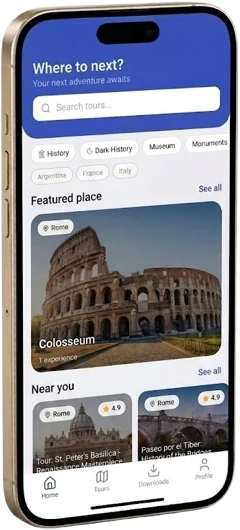
Most guides to Barcelona spend all their attention on Gaudí and leave the neighborhoods as an afterthought. Trevurs does the opposite: a free audio tour of El Born, recorded by the people who actually live there, walking you through what the medieval streets meant then and what they mean now, one workshop and one plaza at a time. Download the app before you go and let a local fill in what a map alone cannot show you.