Vienna's Coffee Houses: Which to Visit and How to Order
In 2011, UNESCO added Viennese coffee house culture to its list of Intangible Cultural Heritage. Not the coffee, the culture: the right to sit for three hours over a single cup, read every newspaper on the rack, and never be asked to leave. That unwritten deal is the real reason to go, and it is also the reason first-timers get confused. Here is how it works.
What makes a Viennese coffee house different
A Kaffeehaus is not a café in the Starbucks sense. It is a living room for people who prefer not to stay home. Marble tables, bentwood Thonet chairs, newspapers on wooden holders, waiters in black and white who have seen it all. The classic ones date from the 1870s to 1900s, when Vienna was the capital of an empire and half of its writers, politicians and psychoanalysts did their paperwork over a Melange.
Some basics before you sit:
- Sit wherever you like (unless there is a sign), then wait. Nobody will rush to you, and that is on purpose.
- Your coffee comes with a glass of water, often refilled for free. Drink it, it is part of the ritual.
- You pay at the table when you are ready. Ask for "Zahlen, bitte".
- Tip by rounding up, around 5 to 10 percent. Say the total you want to pay ("Zehn Euro") instead of leaving coins on the table.
How to order coffee like a local
The menu can look like a code. Here is the short decoder:
- Melange: espresso with steamed milk and a little foam. The city's signature, close to a cappuccino but milder.
- Kleiner Schwarzer / Großer Schwarzer: small or large black coffee (a single or double espresso).
- Verlängerter: an espresso stretched with hot water, similar to an americano.
- Einspänner: strong black coffee in a glass, topped with whipped cream. Named after the coachmen who needed a hand free to hold the reins.
- Kapuziner: espresso with a drop of milk, the color of a Capuchin monk's habit (and the origin of the word cappuccino, according to the usual story).
- Brauner: black coffee with a splash of milk, small or large.
- Wiener Eiskaffee: iced coffee with vanilla ice cream and cream, a good summer option.
Prices vary a lot by café and year. Expect roughly 4.50 to 7 euros for a Melange, with the famous central spots at the top of that range. Verify the menu before you order, since prices keep creeping up.
Where to go: four classics
Café Central (Herrengasse 14). Opened in 1876 inside the Palais Ferstel, with vaulted ceilings and tall stone columns that make it the most photographed interior in the city. Regulars once included Trotsky, Freud and the writer Peter Altenberg, whose plaster statue still sits by the entrance. There is often a line at midday, so go on a weekday morning or late afternoon. A slice of cake runs around 6 to 8 euros, and a Melange around 6.50, so plan for a splurge.
Café Landtmann (Universitätsring 4). Opened in 1873 on the Ringstrasse, facing the Burgtheater and the city hall. It is a favorite of politicians and actors, and Freud was a regular. Smarter and calmer than Central, with a terrace in summer. Expect higher prices than the average café.
Café Sperl (Gumpendorfer Straße 11). Open since 1880 and barely changed since: billiard tables in the back, worn red banquettes, a crowd of locals instead of tour groups. If you want the Kaffeehaus of the guidebooks without the line, this is it. Great for Apfelstrudel and a long newspaper session.
Café Hawelka (Dorotheergasse 6). A tiny, smoky-looking, dim room that has been running since 1939. The specialty is Buchteln, warm yeast buns with jam, baked fresh in the evening. Cash is easier here, and the owner's family keeps the 1940s mood alive.
Sacher vs Demel: the cake war
The Sachertorte, a dense chocolate cake with apricot jam and glaze, was created in 1832 by 16-year-old apprentice Franz Sacher for Prince Metternich. Later, his son's Hotel Sacher and the pastry house Demel fought a legal battle over who could call their version the "Original". It dragged on for years and ended in a settlement in the 1960s: Hotel Sacher has the right to the "Original Sacher-Torte" name with its chocolate seal, while Demel sells the "Eduard-Sacher-Torte" with its own recipe (the apricot layer placement differs).
So which should you choose? A slice at Hotel Sacher or Demel costs around 8 to 10 euros. Sacher's cake is drier and best with a big spoon of unsweetened whipped cream (Schlagobers). Demel's is a little moister, and the shop itself, a gilded imperial bakery on Kohlmarkt, is worth the visit. Try both in one afternoon and pick your own side. Prices are approximate, so check before you order.
Other things worth ordering
- Apfelstrudel: thin pastry, warm apples, raisins, sometimes vanilla sauce. Around 6 to 8 euros.
- Kaiserschmarrn: a shredded fluffy pancake with plum compote, a dessert meant to be shared.
- Topfenstrudel and Mohr im Hemd (chocolate pudding cake with hot chocolate sauce).
- Breakfast sets (Frühstück) are common until midday and are a good deal compared with ordering à la carte.
Practical tips
- Go off-peak. Mornings before 10 or after 3 pm are quiet, even at Central.
- Don't expect to-go coffee. The point is to sit.
- Alone is fine. Many locals come to read or work with a laptop, though some places discourage laptops on weekends.
- Book if you are a group. Some cafés take reservations, others do not. Verify before you go.
- Closing days differ. Some are shut on Sundays or holidays. Check opening hours online.
Explore Vienna with Trevurs
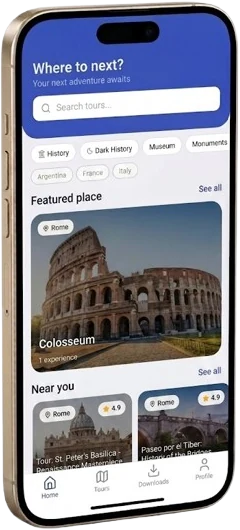
Pair your coffee with some history. Trevurs has free self-guided audio tours that work offline, so you can listen as you walk between cafés. The Habsburgs: 600 Years of Power, Madness, and Fall covers the dynasty that built the Vienna you are sipping coffee in, and Dark Vienna: 1914 and the End of an Empire of 50 Million follows the last years before everything changed. Download them, put on your headphones, and take a coffee break whenever the story needs it.