Valencia Travel Guide: Real Paella, Ciudad de las Artes and the Beach
Order a seafood paella in Valencia and you will get a perfectly good rice dish, just not the one the city invented. The original paella valenciana has no prawns, no mussels and no chorizo. It is chicken, rabbit, two kinds of beans, tomato, olive oil, saffron, water, salt and rice, cooked in a wide flat pan over a wood fire. Valencians take this so seriously that a chef's "paella with chorizo" video once started an online war that reached the national press.
The same city that guards a rice recipe like a constitution also built one of the most futuristic architectural complexes in Europe inside an old riverbed. Here is how to see it well.
Real Paella Valenciana: What It Is and Where to Eat It
The canonical recipe uses chicken, rabbit, garrofó (a big flat white bean), ferraura (a wide green bean), grated tomato, olive oil, saffron and a short-grain rice like bomba or senia. Some cooks add snails or a sprig of rosemary. The crisp, slightly toasted layer at the bottom of the pan is the socarrat, and scraping it is the best part.
Three rules locals actually follow:
- Paella is lunch. Valencians eat it at midday, often on Sundays with family. Restaurants that push paella at 9 p.m. are cooking for tourists.
- It takes time. A real paella is made to order and needs 20 to 30 minutes. Most places require a minimum of two people. If it arrives in five minutes, it was reheated.
- Skip the photo menus. Pans sitting on display on a terrace near the cathedral are the clearest warning sign.
Where to go: The rice fields of La Albufera, a freshwater lagoon about 15 km south of the city, are where this dish comes from. The village of El Palmar is basically a street of rice restaurants on the canals. Go for lunch, then take a boat ride on the lagoon (roughly 30 to 45 minutes) and stay for the sunset if you can. Buses run from the city center; check current schedules before you go. Closer in, the beachfront at Malvarrosa has classic rice houses such as La Pepica, where Hemingway ate, and Casa Carmela, which still cooks over orange wood. Expect to pay around €15 to €25 per person for paella at a good restaurant.
Horchata and Fartons
Valencia's summer drink is horchata, a cold, sweet milk made from chufa (tiger nuts) grown in the fields of Alboraya, just north of the city. You dip fartons into it: long, soft, sugar-glazed pastries designed to soak it up. In the old town, the horchaterías on Plaza de Santa Catalina (Santa Catalina and El Siglo) have been pouring it for generations. Ask for it granizada (half-frozen) on a hot day.
Mercado Central and the Lonja de la Seda
The Mercado Central is one of the largest fresh-food markets in Europe, a modernist hall of iron, glass and tiles that opened in 1928. It has around 300 stalls of ham, fish, rice, saffron, oranges and peppers. It opens Monday to Saturday in the morning, roughly 7:30 a.m. to 3 p.m., and it is closed on Sundays. Go before 11 a.m. to see it working at full speed.
Right across the street is the Lonja de la Seda (Silk Exchange), a UNESCO World Heritage Site since 1996. Built at the end of the 15th century, its Contract Hall has twisted stone columns that rise like palm trees into the vaulted ceiling. Entry is about €2, free on Sundays and holidays.
The Cathedral and the Holy Chalice
Inside Valencia Cathedral there is a chapel holding the Santo Cáliz, an agate cup that the Church in Valencia venerates as the Holy Grail. Archaeologists date the cup itself to roughly the 1st century BC or AD; the gold mounting and handles are medieval. It arrived in Valencia in 1437 and both John Paul II and Benedict XVI used it during Masses in the city. Admission to the cathedral includes an audio guide and costs around €9 to €10 (check the current price at the ticket office). The Miguelete bell tower needs a separate ticket and about 200 steps, and the view over the rooftops is worth every one.
Here is a free extra: every Thursday at noon, the Tribunal de las Aguas meets at the cathedral's Apostles' Door. Farmers' water disputes have been settled there, out loud and in Valencian, for centuries. UNESCO lists it as intangible heritage.
The Turia Gardens: A River Turned into a Park
After a devastating flood in October 1957, Valencia diverted the Turia River south of the city. The government's plan for the empty riverbed was a highway. Residents pushed back, and instead the city got a park of roughly 9 km that curves around the old town. Today it is the best way to get around: rent a bike and ride from the Palau de la Música to the City of Arts and Sciences past football pitches, orange trees and the giant Gulliver playground.
City of Arts and Sciences
At the eastern end of the gardens, Santiago Calatrava's Ciudad de las Artes y las Ciencias looks like a set from a science-fiction movie: the eye-shaped Hemisfèric, the ribbed Science Museum, the Palau de les Arts opera house and Félix Candela's Oceanogràfic, the largest aquarium in Europe. Walking around the pools outside is free and best at sunset or after dark, when the buildings are lit.
Rough 2026 prices, so check the official site before buying: the Oceanogràfic starts around €39 for adults, the Science Museum about €9, and combined tickets save money if you plan to see more than one. Allow at least half a day for the aquarium alone.
The Beaches: Malvarrosa and Beyond
Valencia is one of the few big European cities with a long urban beach. Las Arenas and Malvarrosa run north along a wide promenade, with Patacona beyond them for a calmer scene. From the center, take the tram (lines 4 or 6) or metro to the seafront; it takes about 20 to 30 minutes.
Fallas 2027: The Week the City Sets Itself on Fire
Las Fallas is Valencia's great festival, recognized by UNESCO in 2016. Neighborhoods spend a year building enormous satirical sculptures of wood and cardboard, then burn them all on one night. For 2027, the main days should be March 15 to 19, with the plantà (when the monuments go up) on the night of March 15, the flower offering to the Virgin on March 17 and 18, and the cremà (the burning) on the night of Friday, March 19. The daily mascletà, a deafening 2 p.m. firecracker show in the Plaza del Ayuntamiento, runs from March 1 to 19. Confirm the final program with the Junta Central Fallera, and book accommodation months ahead: prices jump sharply that week.
Practical Tips
- From the airport: Metro lines 3 and 5 connect the airport with the center in about 20 to 25 minutes, every 15 to 20 minutes. The airport fare is about €4.80, plus a rechargeable card (around €1.10). The Valencia Tourist Card includes airport trips and free entry to the Lonja and other sites.
- Tourist tax: As of 2026, there is no tourist tax in Valencia or the rest of the Valencian Community. A regional tax was approved in 2022 but repealed before it took effect. The city has said it is open to studying one, so check again if you travel in 2027.
- How long to stay: Two full days cover the old town, the gardens and the City of Arts and Sciences. Add a third for the Albufera and the beach.
Explore Valencia with Trevurs
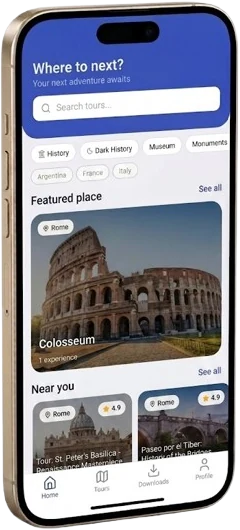
Before you sit down for paella, walk the story behind it. In the Trevurs app, the free self-guided tour "Valencia: the Merchants' Exchange, the Cup Called the Grail and the Paella with Rules" takes you through the Lonja, the cathedral and the Holy Chalice, and the old town that invented the rice dish everyone gets wrong. It works offline, at your own pace, so you can stop for a horchata whenever you want.