Spain by Train: Renfe, Ouigo, Iryo and How to Get Cheap Tickets
In 2019 a last-minute ticket from Madrid to Málaga could easily cost you over 100 euros, and Renfe was the only company selling it. Then the track opened to competition. French Ouigo arrived in 2021, Italian-backed Iryo followed months later, and fares on routes like Madrid–Málaga fell by more than half compared with 2019. Today Spain has the longest high-speed network in Europe, three operators fighting over it, and a pricing system that rewards anyone who books early and compares.
The Three Operators (and Renfe's Many Brands)
Renfe is the state operator and still runs most trains. Its brands confuse first-timers, so here is the short version:
- AVE: the classic high-speed service. More legroom, flexible fares, bags without fuss.
- Avlo: Renfe's low-cost high-speed brand. Cheaper, denser seating, one small bag included. Renfe pulled Avlo off Madrid–Barcelona in September 2025 after cracks were found on one of its trains; check whether it is running on your date before you plan around it.
- Alvia: long-distance trains that can switch track gauge, so they reach places off the high-speed grid (Cádiz, Huelva, Santander, Asturias, Galicia).
- Avant and Media Distancia: regional and short high-speed hops, like Madrid–Toledo.
- Cercanías / Rodalies: commuter trains around big cities, including airport links.
Ouigo (owned by France's SNCF) runs double-decker trains on Madrid–Barcelona, Madrid–Valencia/Alicante, Madrid–Córdoba–Seville/Málaga and Madrid–Murcia. Since December 2025 it also runs a direct Barcelona–Zaragoza–Madrid–Córdoba–Seville train in about five and a half hours, which saves a change in Madrid.
Iryo (a partnership with Italy's Trenitalia, using red Frecciarossa trains) covers Madrid–Barcelona via Zaragoza, Madrid–Valencia and Madrid–Alicante via Cuenca, and Madrid–Córdoba–Seville/Málaga, plus some through trains from Barcelona to Andalusia.
Granada, Toledo and Segovia are served by Renfe only, so do not waste time searching for them on the other two.
Typical Journey Times
- Madrid–Barcelona: about 2 h 30 to 3 h 10 (see the delays section below)
- Madrid–Seville: about 2 h 30 to 2 h 50
- Madrid–Córdoba: about 1 h 45
- Madrid–Málaga: about 2 h 40 to 3 h
- Madrid–Valencia: about 1 h 45 to 2 h
- Madrid–Zaragoza: about 1 h 20
- Madrid–Toledo (Avant): about 33 minutes
- Madrid–Segovia: about 30 minutes to the Segovia-Guiomar station, then a bus into town
How Much Tickets Cost (and When to Buy)
Prices are fully dynamic, like airline seats. Rough 2026 ranges for a one-way standard seat:
- Madrid–Barcelona: promo fares from around 10–20 euros on Ouigo or Iryo if you book weeks ahead; 40–80 euros is common closer to the date; Friday and Sunday evenings can pass 100 euros on AVE.
- Madrid–Seville / Málaga: this is where competition is fiercest. Expect roughly 15–45 euros with some notice, more on holiday weekends.
- Madrid–Valencia: often 15–40 euros booked ahead.
How to pay less:
- Book as soon as sales open for Easter, summer, Christmas and long weekends (puentes). Operators now sell months ahead, sometimes a full year.
- Compare all three. Use each operator's app or a comparison site like Trainline or Omio. The cheapest company changes by route and by day.
- Avoid peak hours. Early-morning and midday trains are usually cheaper than Friday afternoon departures.
- Read the fare rules. The cheapest fares (Renfe Básico, Ouigo Essential, Iryo Inicial) often charge for changes, seat selection or larger luggage. A 9-euro ticket plus a 15-euro bag is no longer a bargain.
- Free commuter connection: many Renfe long-distance tickets include a Combinado Cercanías trip to or from the station on the local network. Look for the code on your ticket.
Passes: Spain Pass and Interrail
The Renfe Spain Pass is for non-residents and covers a fixed number of journeys (4, 6, 8 or 10) on AVE, Avlo, Alvia and other Renfe trains within one month of your first trip. At launch it cost around 220 euros for 4 journeys in standard class; check the current price on Renfe's site. Each train counts as one journey, so a change in Madrid uses two.
Interrail and Eurail work on Renfe, but high-speed trains need a paid seat reservation (often 10–15 euros) and passholder quotas sell out. Ouigo and Avlo do not accept passes, and most Iryo fares do not either.
Honest math: with promo fares this cheap, a pass only pays off if you book late, travel in peak season, or want flexibility. Price your actual trips first.
Stations: Atocha, Chamartín and Sants
Madrid has two main stations and it matters which one is on your ticket.
- Madrid Puerta de Atocha handles most trains to Andalusia (Córdoba, Seville, Málaga), Toledo and many to Barcelona. The old iron hall shelters a tropical garden with thousands of plants, worth a few minutes if you arrive early.
- Madrid Chamartín-Clara Campoamor, in the north, handles most Valencia and Alicante trains, Segovia, Valladolid and the north, plus some Barcelona services from Iryo and Ouigo.
Cercanías trains link the two in about 10–15 minutes, but give yourself at least an hour between connections. Some weekend works on the Atocha–Sol tunnel can change routes, so double-check before travel.
In Barcelona, almost everything stops at Sants. In Seville it is Santa Justa, in Málaga María Zambrano, in Valencia Joaquín Sorolla.
Security, Luggage and Boarding
Spanish high-speed stations have airport-style X-ray scanners for your bags before the platform. There are no liquid limits, but queues can be long at Atocha and Sants on Friday afternoons. Arrive 30 minutes early (45 on busy weekends). Gates usually close a few minutes before departure and they do not reopen.
AVE and Alvia are relaxed about bags. Avlo, Ouigo and Iryo's basic fares limit what you carry and charge for extra suitcases, so read the conditions when booking.
Delays in 2026: What to Expect
It has been a hard year for Spanish rail, and it is fair to say so. On January 18, 2026, an Iryo train derailed near Adamuz (Córdoba) and collided with an Alvia coming the other way, killing more than 40 people. It was one of the worst rail accidents in Spain in decades. The Madrid–Andalusia line closed until mid-February, and a landslide near Álora kept Málaga cut off from high-speed service until the end of April.
Afterwards, the infrastructure manager Adif imposed temporary speed limits at several points. In the following months only around half of long-distance trains arrived on time, and on Madrid–Barcelona the limits added roughly 25 minutes to schedules through at least the summer of 2026. Ridership dropped by almost 20% in the first four months, and has been recovering since.
What this means for you: service runs normally on all main routes, and statistically trains remain far safer than driving. Do leave buffers. Do not book a train that lands 90 minutes before an international flight, and check the operator's app on the day.
The Bus Alternative: ALSA
ALSA is Spain's biggest bus company. It is slower (Madrid–Valencia takes around 4 hours, Madrid–Granada around 5) but often cheaper at the last minute, and it reaches towns without high-speed rail.
Explore Spain's Cities with Trevurs
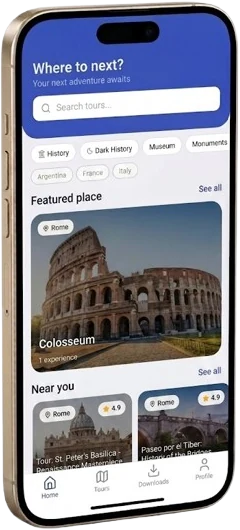
The train gets you between cities in a couple of hours. Trevurs fills the time once you arrive, with free self-guided audio tours that work offline:
- Madrid: "Habsburg Madrid: the Small Town That Became the Capital of an Empire" and "The Prado: the Building Meant for Science That Ended Up Housing Velázquez and Goya"
- Barcelona: "Barcelona: Two Thousand Years of History Stacked Beneath the Gothic Quarter" and "Gaudí: the Architect Who Gave 43 Years to a Church He Knew He Would Never See Finished"
- Seville: "Seville: The Alcázar of the King Who Lived Like a Sultan"
- Córdoba: "Córdoba: the Mosque with a Cathedral in Its Heart"
- Málaga: "Málaga: Picasso, the Phoenicians and the City Nobody Stayed to See"
- Valencia: "Valencia: the Merchants' Exchange, the Cup Called the Grail and the Paella with Rules"
- Zaragoza: "Zaragoza: the Virgin of the Pillar, the Ebro and Two Thousand Years of City"
- Day trips from Madrid: "Toledo: Moors, Jews and Christians in One Square Kilometer" and "Segovia: the Aqueduct Held Up Without Mortar and the Square Where Isabella Crowned Herself"
Download them before you board, and step off the train ready to walk.