Sicily in a Week: Palermo, Agrigento, Catania and Etna
The best-preserved Greek temple in Sicily survived because a bishop turned it into a church. Around 597 AD, the Temple of Concordia in Agrigento got walls between its columns and a new job, and that saved it from the quarrying that stripped its neighbors down to their foundations. Greeks, Romans, Arabs, Normans and Spaniards all left something behind, and you can see a lot of it in one week if you plan the route well.
This itinerary runs west to east, from Palermo to Catania, with Agrigento, Etna, Siracusa and Taormina in between. Fly into Palermo (PMO) and out of Catania (CTA), or the reverse, so you never backtrack across the island.
Car, Train or Bus?
Sicily is the largest island in the Mediterranean, and how you move around it decides the shape of your trip.
- Car: the most flexible option, and almost essential if you want the interior, small hill towns or a sunset at the temples. The catch: do not drive in central Palermo or Catania. Both have ZTL zones (limited traffic areas) with camera fines, traffic is chaotic and parking is scarce.
- Train: good on a few lines and slow on others. Palermo to Cefalù takes about an hour, Palermo to Agrigento about 2 hours, Catania to Siracusa a bit over an hour. Palermo to Catania by train is usually 3 hours or more, often with a change.
- Bus: often faster than the train between big cities. SAIS and FlixBus run Palermo to Catania in about 2.5 hours. Interbus covers Catania to Siracusa and Catania to Taormina. AST, the regional company, runs the daily bus up to Etna.
Our recommendation: use public transport for Palermo and Cefalù, rent a car in Agrigento or Catania for the Etna day if you want extra freedom, and drop it before Siracusa and Taormina, where parking is a headache. If you prefer not to drive at all, the whole itinerary below works by bus and train.
Day 1: Palermo, the Norman Capital
Start where Sicily is most layered. Palermo was an Arab emirate before the Normans took it in the 11th century, and the Norman kings kept Arab architects, Greek mosaicists and Latin clerks working side by side. You see it in the Palatine Chapel inside the Palazzo dei Normanni: Byzantine gold mosaics under a wooden ceiling carved by Islamic artisans.
Then walk the Quattro Canti, Piazza Pretoria, the Cathedral and the churches of San Cataldo and La Martorana. Trevurs has a free audio tour that links them into one story: "Palermo: the Norman Capital That Ruled Arabs, Greeks and Latins at Once".
Eat in Ballarò market: pane e panelle (chickpea fritters in a bun), sfincione (thick Palermo pizza) and your first arancina.
Day 2: Monreale or Cefalù
Pick one, or both if you start early.
- Monreale: 30 to 40 minutes by bus from Palermo. The cathedral holds one of the largest cycles of Byzantine mosaics in the world, with Christ Pantocrator watching over the whole apse.
- Cefalù: about an hour by train along the coast. A Norman cathedral with two towers, a medieval center and a beach right in town.
Day 3: Agrigento and the Valley of the Temples
Head south: about 2 hours by train or bus from Palermo. The Valley of the Temples is a ridge of Doric temples from the 5th century BC, built when Akragas was one of the richest Greek cities in the Mediterranean. The Temple of Concordia is the star, but walk the whole ridge: Juno, Heracles, the fallen giant Telamon of the Temple of Olympian Zeus.
- Tickets: published prices for 2026 vary between sources (roughly €10 to €15 for the park). Check the official site and buy online in summer.
- When: go at opening (8:30) or late afternoon. In July and August the midday heat on the ridge is brutal and there is very little shade.
Before you go, download "Agrigento: Sicily's Richest Greek City and the Temples Still Standing" in Trevurs. It explains why a city this rich still lost everything to Carthage in 406 BC.
Day 4: Across the Island to Catania
Agrigento to Catania takes about 3 hours by bus or car through the interior, with wheat fields and almost no towns. If you drive, stop at the Villa Romana del Casale near Piazza Armerina, with its famous Roman floor mosaics.
In Catania, everything is built from black lava stone, which is why the city looks darker than the rest of Sicily. See Piazza del Duomo, the elephant fountain and the morning fish market, La Pescheria. Then go to Aci Trezza, just north, where the sea stacks are said to be the rocks the Cyclops threw at Odysseus. The Trevurs tour "The Odyssey: The Real Places of Odysseus's Journey" starts from Catania and follows that thread.
Day 5: Mount Etna
Etna is the most active volcano in Europe, and it is a real mountain (over 3,300 m), so plan it seriously.
- Getting there without a car: the AST bus leaves Catania early in the morning (around 8:15) for Rifugio Sapienza (about 1,900 m) and returns in the afternoon (around 16:30). It costs a few euros. Schedules change in winter, so confirm with AST.
- Going higher: from Rifugio Sapienza, the cable car climbs to about 2,500 m. Reported 2026 prices are around €54 return for the cable car alone and around €82 including the 4x4 bus and a guide to about 2,900 m. Verify before you go.
- The summit craters: only with an authorized alpine or volcanological guide, and they close often when the volcano is active. Treat them as a bonus, not a promise.
- Pack layers: it can be 15 to 20 degrees colder at the top than in Catania, and the wind is strong. Proper shoes, not sandals.
Day 6: Siracusa and Ortigia
About an hour by train or Interbus from Catania. Siracusa was once a rival to Athens. Visit the Neapolis Archaeological Park (the Greek theater and the Ear of Dionysius) in the morning, then cross to Ortigia, the island that is the old town. The Cathedral of Siracusa is the best example of reuse in Sicily: its walls are literally the Doric columns of a Greek temple to Athena. End at the Fountain of Arethusa, where papyrus grows in a freshwater spring a few steps from the sea.
Day 7: Taormina
Taormina sits on a cliff above the sea, about an hour from Catania by Interbus (or train to Taormina-Giardini plus a short bus up). The Greek Theater frames Etna and the coast in one view. Walk Corso Umberto, then take the cable car down to Isola Bella if the weather is good.
What to Eat in Sicily
- Arancina or arancino: a fried rice ball. In Palermo it is feminine (arancina) and round; in Catania it is masculine (arancino) and often cone-shaped, like Etna.
- Cannoli: order them filled to order, so the shell stays crisp. Sheep's milk ricotta is the classic.
- Granita with brioche: the Catania breakfast. Almond, pistachio, coffee or mulberry granita with a soft brioche to dip.
- Pasta alla Norma: eggplant, tomato and salted ricotta, a Catania classic.
Practical Tips
- Best months: April to June and September to October. July and August are hot and crowded.
- Sundays: fewer trains and buses run, so check timetables before you plan a transfer day.
- Skip if short on time: trying to add the Aeolian Islands or Trapani into a one-week loop. Save them for a second trip.
Explore Sicily with Trevurs
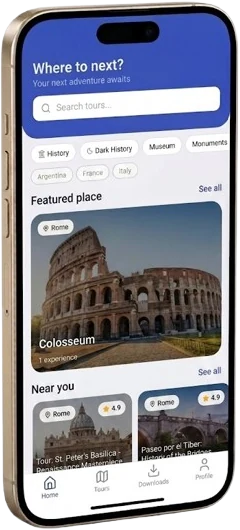
Sicily rewards people who know the story behind the stones. Download Trevurs and take "Palermo: the Norman Capital That Ruled Arabs, Greeks and Latins at Once", "Agrigento: Sicily's Richest Greek City and the Temples Still Standing" and "The Odyssey: The Real Places of Odysseus's Journey" in Catania. They are free, self-guided and work offline, which helps on an island where mobile signal comes and goes between the hills.