Seville Travel Guide: Alcázar, Cathedral and the Best Tapas Bars
The bell tower of Seville Cathedral has no stairs. To reach the top of the Giralda you walk up 35 ramps, built wide enough for a man on horseback, because the tower began life in the 12th century as the minaret of the city's great mosque and the muezzin rode up to call the prayer. That is Seville in one detail: a Christian city built directly on top of an Islamic one, which never bothered to erase it.
This guide covers the Alcázar, the Cathedral and the tapas, plus Triana, flamenco and when to go.
The Real Alcázar: Book Before You Fly
The Alcázar is the reason many people come to Seville, and the reason many leave disappointed: it sells out. Daily capacity is limited, and in spring and around holidays tickets for the next few days are often gone.
- Price: general admission is €15.50 on the official site, reduced €8 (over 65s, students aged 14 to 30). Children under 13 with an adult enter free but still need a ticket. The upper royal apartments (Cuarto Real Alto) are an extra €5.50 and are visited in small timed groups.
- Hours: 9:30 a.m. to 5:00 p.m. from October to March, and to 7:00 p.m. from April to September. Closed on January 1 and 6, Good Friday and December 25.
- Where to buy: only on the official website (alcazarsevilla.org) or at the Patio de Banderas ticket office (card only). Resellers charge more for the same entry.
- Free visits: the Alcázar offers free slots on days set by its board, traditionally on Monday afternoons in the final hour. They are released online and go fast. Check the official site rather than trusting old blog posts.
- ID: carry your passport. Reduced and free tickets are checked against documents at the gate.
What you are seeing is mostly the palace of Pedro I of Castile, who in the 1360s hired Muslim craftsmen from Granada and Toledo to build him a Mudéjar palace that looks more like the Alhambra than anything Christian. The Arabic inscriptions on the walls praise a Christian king. The Patio de las Doncellas, the Salón de Embajadores with its golden dome, and the gardens (where Game of Thrones filmed the Water Gardens of Dorne) need at least two to three hours. The upper floors are still used by the Spanish royal family, which makes it one of the oldest royal residences in use in Europe.
Tip: take the first slot of the day. By 11 a.m. the Patio de las Doncellas is a queue for photos.
Seville Cathedral and the Giralda
The cathedral is the largest Gothic church in the world by volume, and the people who decided to build it in 1401 reportedly said they wanted a church so big that "those who see it will think we were mad." They demolished most of the mosque but kept the minaret and the courtyard of orange trees, the Patio de los Naranjos, where worshippers once washed before prayer.
- Price: €13 online, €14 at the ticket office, reduced €7/€8. The ticket includes the Giralda.
- Hours: Monday to Saturday 10:45 a.m. to 7:00 p.m., Sunday 2:30 p.m. to 7:00 p.m. The ticket office closes at 6:00 p.m. Hours change for services, so check before you go.
- Free entry: a limited number of free tickets are handed out at certain times, subject to the liturgical calendar (the cathedral announces the schedule). Expect a queue.
- Don't miss: the tomb of Christopher Columbus, carried by four giant pallbearers representing the kingdoms of Spain, and the main altarpiece, the largest in Spain, covered in gold.
Walk the 35 ramps of the Giralda slowly. The view over the Alcázar and the rooftops is the best free orientation lesson in town. The guided rooftop tour (Cubiertas) is sold separately and worth it if you like heights.
Plaza de España and María Luisa Park
Free, open all day, and the most photographed place in the city. It was built for the 1929 Ibero-American Exposition by architect Aníbal González as a giant half-circle that "embraces" Latin America. Along the base are tiled alcoves for the Spanish provinces, each with a map and a historical scene.
Yes, it looks familiar: it played the planet Naboo in Star Wars: Episode II. Come at sunset when the brick turns orange, or first thing in the morning before the tour groups. You can rent a rowing boat on the canal. María Luisa Park next door is the best shade in Seville on a hot afternoon.
Las Setas (Metropol Parasol)
The giant wooden "mushrooms" over Plaza de la Encarnación opened in 2011 and are one of the largest wooden structures in the world. The walkway on top gives a 360° view of the old town. Admission has been around €15 for non residents and includes a short multimedia show, so check the official site for current prices and night sessions. Under the plaza, the Antiquarium shows Roman and Moorish house foundations found during construction.
Triana: Across the River
Cross the Puente de Isabel II and you are in Triana, the old neighborhood of sailors, potters and flamenco singers. Right at the end of the bridge, under the Mercado de Triana, sits the Castillo de San Jorge. From 1481 it was the headquarters of the Spanish Inquisition in Seville, the first city where the new tribunal sent people to the stake. Today it is a small interpretation center built around the excavated ruins. It is short, intense and usually quiet, so check the opening hours before crossing.
Then stay for lunch in the market, walk down Calle Betis along the river and browse ceramics on Calle Alfarería and Callejón de la Inquisición.
Flamenco: Tablao or Peña?
- Tablao: a professional show in a small venue, about an hour long, at fixed times. Good quality, tourist audience. Expect roughly €25 to €45 depending on the venue and whether a drink is included.
- Peña: a members' club for flamenco lovers that sometimes opens its doors to the public. Rawer, cheaper, more local, irregular schedules. Ask at your hotel or look up Triana and Macarena peñas for that week.
Whatever you choose, sit close. Flamenco is about the footwork and the faces.
Where to Eat Tapas
Seville eats late: lunch from 2 p.m., dinner after 9 p.m. Order standing at the bar, one or two tapas each, then move on.
- El Rinconcillo (since 1670, considered the oldest bar in Seville): the waiters still write your tab in chalk on the wooden bar. Order espinacas con garbanzos (spinach with chickpeas) and the cod.
- Bodeguita Romero: famous for its pringá montadito, a small bread roll stuffed with slow cooked meats.
- Casa Morales: an old wine shop with huge clay jars, near the cathedral.
- Las Golondrinas (Triana): grilled mushrooms and punta de solomillo.
- Must try: salmorejo, solomillo al whisky, carrillada (braised pork cheek), pescaíto frito and a cold glass of manzanilla.
Avoid the photo menus on the streets right next to the cathedral. Two blocks away, prices drop and quality goes up.
When to Go (and When Not To)
- Best: March to May and late October to November. Orange blossom in spring is unforgettable.
- Semana Santa 2027: Palm Sunday March 21 to Easter Sunday March 28. Processions all week, hotels triple their prices, and some streets become impossible to cross.
- Feria de Abril 2027: expected in mid-April (around April 12 to 18), about two weeks after Easter. The city council confirms the final dates. Most casetas are private, but public ones exist.
- Summer: July and August often pass 40 °C. If you go, sightsee from 9 to 1, rest in the afternoon like the locals, and go out again after 8 p.m.
Explore Seville with Trevurs
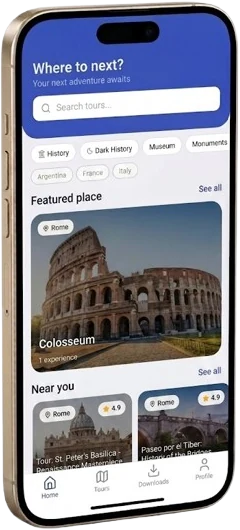
Seville's monuments are much better when you know who built them and why. Trevurs has two free self-guided audio tours here that work offline on your phone: "Seville: The Alcázar of the King Who Lived Like a Sultan", which explains how Pedro I filled a Christian palace with Arabic poetry, and "Seville: Where the Inquisition Lit Its First Pyre", which crosses the river from the old town to the secret prisons of the Castillo de San Jorge in Triana. Download them before you go and walk at your own pace.