Porto Travel Guide: Port Wine, Ribeira and the Francesinha
Porto gave its name to the world's most famous fortified wine, but almost none of it is stored in Porto. For three centuries the barrels have crossed the Douro to Vila Nova de Gaia, the town on the south bank, where the cooler, damper air ages wine more slowly. And the names painted on those lodge roofs (Taylor's, Graham's, Cockburn's, Sandeman) are mostly British. When England went to war with France in the late 1600s and stopped drinking claret, English merchants came to northern Portugal looking for a substitute, added brandy so the wine would survive the sea voyage, and the 1703 Methuen Treaty locked in the trade. Port wine is, in a sense, an English invention bottled in Portugal.
That story is the key to the whole city. Here is how to see Porto in two or three days, with the prices that matter in 2026.
The Ribeira: Start at the River
The Ribeira is the postcard: tall, narrow houses painted ochre, blue and red, stacked up the hill above the Cais da Ribeira, with the rabelo boats that once carried barrels downriver moored in front. The historic center of Porto has been a UNESCO World Heritage Site since 1996, and this waterfront is its heart.
- Go early or late. By noon the quay is packed with restaurant touts and tour groups. At 8 a.m. you get the light and the river almost to yourself.
- Eat one street back. Restaurants facing the water charge for the view. Walk two minutes uphill into the lanes behind and prices drop noticeably.
- Six bridges cruise: the 50-minute boat trips leave from both banks and cost around €15 to €20. Nice, but not essential if you walk the bridge instead.
Ponte Luís I: Cross on the Top Deck
The iron bridge that dominates every photo opened in 1886. It was designed by Théophile Seyrig, a former partner of Gustave Eiffel, which is why people keep wrongly crediting it to Eiffel himself. It has two decks: the lower one carries cars and pedestrians at river level, and the upper one, about 45 meters above the water, carries metro Line D and a walkway.
Cross on the top. The view down to the Ribeira roofs and the Gaia lodges is the best free thing in the city. Start at the Porto end near the cathedral, walk across to the Jardim do Morro on the Gaia side and stay for sunset; locals bring a drink and sit on the grass. Then take the Teleférico de Gaia (cable car) or the stairs down to the wine lodges. Watch out: the metro shares the deck, so stay on the side paths.
Port Wine Cellars in Vila Nova de Gaia
You will see more than a dozen lodges along the Gaia riverfront. Most offer a guided visit through the barrel rooms followed by a tasting. Approximate 2026 prices (check each cellar's site, they change with the tasting format):
- Cálem: around €22 for a one-hour tour with an interactive museum and two ports. Closest to the bridge, good for a first visit.
- Taylor's: around €25. Audio-guided visit of about 90 minutes, ending on a garden terrace with a white port and a reserve. Uphill, so worth it for the setting.
- Graham's: higher up the hill with a great view; premium tastings run around €40.
- Cockburn's: around €30, small groups and an on-site cooperage where you can see barrels being repaired.
- Poças: around €23, a family-owned Portuguese house rather than a British one.
Tips: book a time slot online in summer, because walk-in tours sell out. Do two cellars at most; after the second tasting everything starts to taste the same. And try a white port and tonic at a riverside bar: it is the local aperitif.
Livraria Lello: Know Before You Queue
The 1906 bookshop with the red forked staircase is the most crowded room in Porto. The legend says it inspired Hogwarts because J.K. Rowling lived in Porto in the early 1990s. Rowling herself said in 2020 that she never visited it, but the queue does not care.
You need a ticket voucher to get in. The basic voucher was listed at €8 on the official store when we checked, and its value is deducted from any book you buy inside. Gold and Platinum vouchers (with priority entry or access to the rare book room) cost more. Buy online with a time slot at livrarialello.pt, and go at opening time. Only books count for the discount, not souvenirs.
Torre dos Clérigos and São Bento Station
Torre dos Clérigos is the baroque tower by the Italian architect Nicolau Nasoni, finished in 1763 and about 75 meters tall. For centuries it was the tallest structure in Portugal and the first thing sailors saw coming up the river. You climb around 225 steps for a 360-degree view. A day ticket for the tower and museum costs around €10; in some seasons there are cheaper evening tickets for the tower only.
São Bento Station is free and five minutes away. Look up in the main hall: around 20,000 blue and white azulejo tiles, painted by Jorge Colaço between 1905 and 1916, show battles, royal weddings and peasants harvesting grapes along the Douro. It is still a working station, and it is also where you catch the train to the Douro Valley.
The Francesinha and What Else to Eat
The francesinha ("little Frenchie") is Porto's answer to the croque-monsieur: a sandwich of bread, steak, sausage, ham and cured meats, covered with melted cheese and soaked in a hot sauce made with beer and tomato, often with a fried egg on top and fries on the side. The usual story credits Daniel da Silva, an emigrant back from France, at the restaurant A Regaleira in the 1950s. Expect to pay around €12 to €16 with fries. Share one if you plan to eat again that day.
Also worth trying: bifana (pork sandwich) at a counter, tripas à moda do Porto (the dish that gave locals the nickname tripeiros), and grilled sardines in Matosinhos, a short metro ride to the coast.
Day Trip: The Douro Valley
The vineyards where port grapes grow start about 100 km east, terraced into the slopes along the river. You have two good options:
- Train on your own: the regional train from São Bento to Pinhão takes roughly two and a half hours and costs around €15 to €17 each way, with river views on the right side heading east. Several quintas near Pinhão station offer tastings, but book them ahead. Check the CP timetable, because the last train back leaves early in the evening.
- Organized day tour: around €55 to €75 per person for a small group or bus tour, usually with two wineries, lunch and a short boat ride. Easier if you want to drink without counting train times.
Practical Info for 2026
- From the airport: metro Line E (violet) goes straight to the center (Trindade) in about 30 minutes. You need a rechargeable Andante card (€0.60) loaded with a Z4 trip, which rose to €2.30 in 2026. Validate the card before boarding.
- Tourist tax: Porto charges €3 per person per night, for guests aged 13 and over, up to seven nights, paid at your hotel or apartment. The city council was discussing a rise to €4 in autumn 2026, so check before you book.
- Hills: Porto is steep and paved with granite. Bring shoes with grip, especially when it rains.
- How long: two full days cover the center and Gaia; add a third for the Douro.
Explore Porto with Trevurs
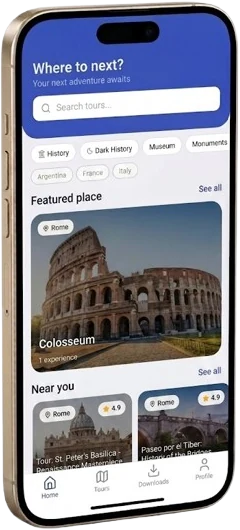
The best way to understand why Porto looks the way it does is to walk it with the story in your ear. In Trevurs, download "Porto: Wine, the English and the Ribeira", a free self-guided audio tour that takes you from the old merchant streets down to the river and explains how a wine trade run by English families shaped the city. It works offline, so you can listen while you cross the bridge without worrying about data.
Heading south next? Lisbon is about three hours away by train, and Trevurs has two free tours there: "Lisbon: How a Small Country Sailed into the Ocean and Changed the World" and "Dark Lisbon: The Empire That Turned People Into Cargo".