Where to See Pope Leo XIV in Buenos Aires: Monumento de los Españoles, Plaza de Mayo and Getting Around
Pope Leo XIV is scheduled to spend four days in Argentina, from November 8 to 11, 2026, and Buenos Aires gets the lion's share: an arrival parade through the city center, a giant open-air Mass in Palermo, Vespers in the cathedral where Pope Francis served as archbishop, and a night vigil with young people. The government expects some 7 million people to move around the country during the visit. If you want to be one of them, this is the practical guide: where each event happens, how to get there when half the avenues are closed, whether you need to register, and what to do with the rest of your day.
One important caveat before you book anything. On October 13 the Pope underwent lung surgery, and on October 16 Cardinal Pietro Parolin said the Vatican will decide on the trip once he leaves hospital and his doctors give their opinion. No change has been announced and the Argentine bishops and government keep preparing as planned, but check the news before you travel.
The Buenos Aires Schedule, Day by Day
Times come from the programme the Holy See released in September, as reported by Argentine media. Some details may still shift.
- Sunday, November 8: the Pope lands at Aeroparque Jorge Newbery at 16:30 (he leaves from Ezeiza on the 11th). Around 17:00 he lays a wreath at the San Martín monument in Plaza San Martín (Retiro), at 17:50 he meets President Javier Milei at the Casa Rosada, and around 18:30 he addresses authorities and the diplomatic corps at the Palacio Libertad (the former CCK). He stays at the Apostolic Nunciature in Recoleta.
- Monday, November 9 (national holiday): 9:15 visit to the Pequeño Cottolengo Don Orione in Claypole, 11:30 Mass at the Monumento de los Españoles, followed by a popemobile tour. In the afternoon he goes to the Catholic University (UCA) in Puerto Madero at 16:10, an interreligious meeting at the Palacio San Martín, and Vespers at the Catedral Metropolitana with the Argentine bishops (time not yet published).
- Tuesday, November 10 (holiday in the city of Buenos Aires and Córdoba): he flies to Córdoba for a 10:00 Mass, comes back in the afternoon and leads the youth vigil at the Monumento de los Españoles at 20:15.
- Wednesday, November 11 (holiday in Buenos Aires province): 8:00 visit to the Devoto federal prison, 10:00 Mass in front of the Basilica of Luján, and farewell at the airport around 13:30 before flying to Lima.
Where Is the Monumento de los Españoles?
The monument stands where Avenida del Libertador meets Avenida Sarmiento, in Palermo, at the edge of the Parque Tres de Febrero (the Bosques de Palermo). Its official name is the Monument to the Magna Carta and the Four Argentine Regions: the Spanish community gave it to the country for the 1910 centenary, although it was only inaugurated in 1927. The white marble column is surrounded by bronze figures for the Andes, the Chaco, the Pampa and the River Plate,. On November 9 the avenues around it become the largest open-air church in the country.
The Mass is the event with the biggest open-to-the-public capacity in the city. Media estimates vary wildly and none is official, so plan for a crowd measured in hundreds of thousands at the very least.
Do You Need to Register?
Registration is free and done on the official site, elpapaenargentina.com.ar, under "Santa Misa en el Monumento de los Españoles". Reports disagree on whether it is mandatory or only recommended, so register anyway: it costs nothing and it is the only way to receive the access information, which the organisers will send by email from November 1.
- What they ask for: name, surname and ID number (DNI) exactly as on your document, where you are travelling from, how you will get there, and an email address.
- Age: 16 or older. Minors are registered by a relative or as part of a group and must come with an adult.
- Groups and families: you can register a single person, a family, a parish group or someone who needs assistance.
- Accessibility: people with an Argentine disability certificate (CUD) can request a special area for themselves and a companion.
- Clergy: priests, deacons, religious and seminarians can request a front sector, subject to approval.
- No edits: once you send the form, it cannot be changed or cancelled. Check it before clicking.
If you are a foreign visitor without a DNI, check on the site which document it accepts, and keep the confirmation email on their phone.
Getting There: Closures and Public Transport
Official street closures had not been published by mid-October. What authorities and media anticipate is clear enough: restrictions on Avenidas Sarmiento, del Libertador and Figueroa Alcorta, controls at the entrances to the Parque Tres de Febrero, and moving, short-notice closures in the city center whenever the motorcade passes. The national security operation runs for 120 hours under three unified commands, and the city government has banned any other event in public spaces from November 6 to 13.
Forget the car. These are the best options to reach Palermo:
- Subte Line D: get off at Plaza Italia or Scalabrini Ortiz and walk a few blocks towards Libertador.
- San Martín train: Palermo station is within walking distance of the park.
- Buses (colectivos): many lines run along Libertador, Santa Fe and Sarmiento, but expect detours on the day. Load your SUBE card in advance.
- On foot: if you are staying in Palermo or Recoleta, walking is the most reliable option. Recoleta is roughly a 30 to 40 minute walk.
Accredited volunteers travel free on the whole SUBE network during the visit; regular attendees pay as usual. Check the city government, Emova (the subte operator) and Trenes Argentinos channels on the morning of each event, because changes will be announced at the last minute.
What to Bring and When to Arrive
Gate opening times will arrive with the access email after November 1. Until then, assume that the closer you want to be, the earlier you need to arrive.
- ID: DNI or passport, and your registration confirmation.
- Water and food: organisers and media mention hydration points and medical posts, but bring your own water bottle and snacks.
- Sun protection: November is late spring in Buenos Aires, with hot sun by midday. Hat and sunscreen are not optional for an 11:30 Mass.
- Layers: a light jacket for the Tuesday night vigil, when it cools down.
- Comfortable shoes: you will walk a lot and stand even more.
- Medication if you take any, and a charged phone with a power bank.
- A meeting point: agree on a fixed spot with your group in advance. Mobile networks tend to collapse in crowds like this.
Seeing Him in the City Center
If Palermo sounds overwhelming, the center offers shorter, more spontaneous chances. On Sunday afternoon the Pope moves between Plaza San Martín, the Casa Rosada and the Palacio Libertad, all within a couple of kilometres of each other. On Monday evening he prays Vespers at the Catedral Metropolitana, on the corner of Plaza de Mayo. Space inside the cathedral is expected to be reserved for bishops and invited groups, so the public will most likely follow from the square. Routes are not published for security reasons.
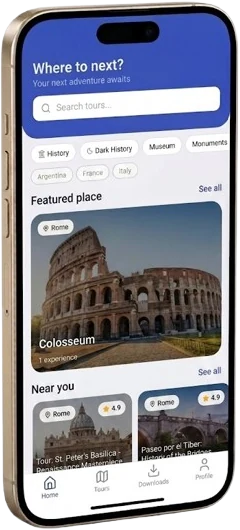
This is also the moment to understand why the cathedral matters. Jorge Bergoglio was archbishop of Buenos Aires from 1998 to 2013, and the building also holds the mausoleum of General San Martín. If you want that context while you wait in the square, Trevurs has free audio tours of the Catedral Metropolitana, Plaza de Mayo and the Casa Rosada, made by locals, that you can play on your phone at your own pace.
Heads Up: Pride March on November 7
The day before the Pope arrives, Saturday November 7, Buenos Aires holds its annual Marcha del Orgullo along Avenida de Mayo, between Plaza de Mayo and the Congress. The city proposed moving it to November 21 because of the papal security operation, but the organisers kept the original date. Expect crowds and closures in the center that afternoon (the 2026 schedule is still to be confirmed), and keep that in mind if you land on Saturday.
Where to Stay and What Else to Do
- Palermo: the obvious choice for the Mass and the vigil. You can walk to the monument and avoid transport chaos entirely.
- Recoleta: elegant, central and walkable to both Palermo and the city center. The Nunciature is here, so expect some security around it.
- San Telmo or Monserrat: good for the Sunday and Monday events in the center, less practical for Palermo.
Monday and Tuesday are holidays, so many shops close but parks and cafés are full. Walk through the Rosedal right next to the monument, cross to Recoleta Cemetery, or spend an afternoon in San Telmo. If you stay a few days longer, Saturday November 14 is the Noche de los Museos, with free entry to museums from 19:00 to 2:00.
Explore Buenos Aires with Trevurs
The Pope's route through Buenos Aires is also the best summary of the city's history: the Plaza de Mayo where Argentina was born, the Casa Rosada where presidents have spoken from the balcony, and the cathedral that sent a cardinal to Rome. Download Trevurs before you fly and you will have free audio tours of the Catedral Metropolitana, Plaza de Mayo and the Casa Rosada ready offline, so the hours of waiting between events turn into a walk you actually understand.