Colonia del Sacramento Day Trip from Buenos Aires: Ferry, Costs and What to See
From the Costanera in Buenos Aires, on a clear day, you can almost see it: Colonia del Sacramento sits about 50 km across the Río de la Plata, and the Portuguese founded it in 1680 precisely because it faced the Spanish capital. For close to a century and a half the two crowns fought, signed treaties and swapped the town back and forth. The result is a historic quarter that UNESCO listed in 1995, where Portuguese stone houses with sloping roofs sit next to Spanish ones with flat roofs and iron grilles. Today the trip that once took a fleet of warships takes about 75 minutes on a fast ferry.
That makes Colonia the easiest international day trip in South America. Here is how to cross, what it costs, how the border works and what to see once you land.
Buquebus vs. Colonia Express: Which Ferry to Take
Two companies run the Buenos Aires to Colonia route, and both fast boats take roughly 1 hour 15 minutes.
- Buquebus leaves from its terminal at Dársena Norte (Av. Antártida Argentina 821, a short taxi ride from Retiro or Puerto Madero). It has the most departures, the biggest boats and a duty free shop on board. It is usually the more expensive option.
- Colonia Express leaves from the Dársena Sur side of the port, on Av. Pedro de Mendoza near La Boca. It tends to be cheaper, especially if you book early or travel midweek.
Prices in 2026 move with the season, the exchange rate and how far ahead you buy. As a rough guide, one way tickets sit around USD 35 to 65 with Colonia Express and USD 55 to 90 with Buquebus, with peaks in January, February, Easter week and the July holidays. A same day return for one person usually lands somewhere between USD 80 and 180. Both companies run frequent online promotions, so compare the two sites on the same date before you pay.
What about Cacciola? For years Cacciola ran the slow, scenic route from Tigre to Carmelo through the Delta. It stopped operating in 2019, and that route has since been covered by other operators. Carmelo is about an hour by road from Colonia, so it only makes sense if you are planning a longer stay in Uruguay. For a day trip, take the direct ferry to Colonia.
The Border: Migration Happens Once, at the Port
This is the part that surprises first timers. You do not queue twice. At the Buenos Aires terminal, Argentine and Uruguayan officers sit side by side in an integrated control: you leave Argentina and enter Uruguay in the same booth, before boarding. When you land in Colonia you just walk off the boat into town. The return works the same way in reverse, at the Colonia terminal.
- Documents: Argentine and Uruguayan citizens can use their national ID. Everyone else needs a valid passport.
- Arrive early: be at the terminal at least 60 to 90 minutes before departure. Check in and migration close before the boat leaves, and a ticket does not save you if you are late.
- Luggage: a small backpack is all you need for a day trip. Both companies allow more, but you will be walking on cobblestones all day.
Money: Uruguayan Pesos, Dollars and Cards
Uruguay uses the Uruguayan peso (UYU). In the historic quarter almost every restaurant and shop also accepts US dollars, usually with change given in pesos. Some places take Argentine pesos, but the rate is rarely in your favor, so do not count on it.
The smartest move is a card issued outside Uruguay. In recent seasons Uruguay has waived VAT (IVA) on restaurant bills paid with a foreign card between mid November and April 30. The discount appears on the ticket or later on your statement. Check that the benefit has been renewed for the 2026/27 season before you plan around it. Carry a little cash in pesos for the lighthouse, museums and tips.
What to See in Colonia's Historic Quarter
The Barrio Histórico is small. You can cover it on foot in three or four hours without rushing.
- Portón de Campo. The old city gate, built by the Portuguese governor Vasconcellos in 1745, with a wooden drawbridge reconstructed in the 20th century and a stretch of wall on each side. Start here: it is the natural entrance, about ten minutes on foot from the ferry terminal.
- Calle de los Suspiros. The most photographed street in Uruguay, a short slope of irregular stones running down toward the river between low colonial houses. Theories about the name range from lovers to prisoners walking to their execution; none is proven. Go early in the morning or late in the afternoon, when the day trippers thin out.
- Plaza Mayor 25 de Mayo. The heart of the old town, shaded by huge trees and surrounded by the ruins of the governor's house and several small museums.
- The lighthouse (Faro). Built in 1857 on the ruins of the 17th century Convent of San Francisco, whose stone walls you can still see at its base. You can usually climb it for a small fee paid in Uruguayan pesos. The view over the rooftops and the river is the best in town. Hours change by season and it may close in bad weather, so check on the spot.
- Basílica del Santísimo Sacramento. Considered the oldest church in Uruguay, its origins go back to the town's first years, although the building was rebuilt more than once after fires and wars.
- The museums. A single combined ticket usually covers several small municipal museums, including the Museo Portugués and the Casa Nacarello. They are tiny, so pick two. Many close one day a week, so confirm before you go.
- The rambla and sunset. Colonia faces west over the river, which means the sun sets over the water. If you can catch a late ferry, stay for it.
If you have extra time, rent a bike, scooter or golf cart and ride along the coast to Real de San Carlos, where a 1910 bullring was restored after decades of abandonment and reopened to visitors.
A Simple Day Trip Plan
- 8:00 to 9:30: early ferry from Buenos Aires.
- 10:00: walk in through the Portón de Campo, then Calle de los Suspiros before the crowds.
- 11:00: Plaza Mayor, the lighthouse and one or two museums.
- 13:00: lunch. Try a chivito (Uruguay's overloaded steak sandwich) or grilled fish, with a glass of Tannat, the country's signature red.
- 15:00: the basilica, the Bastión del Carmen and a walk along the rambla.
- Late afternoon: sunset if your ferry allows it, then back to the terminal at least an hour before departure.
Day trip or overnight? A day is enough to see the essentials. But the best version of Colonia happens after the last ferry leaves: the streets empty, the lamps come on and you have the cobblestones to yourself. If your schedule allows it, one night is worth it.
Extending the Trip to Montevideo
Colonia also works as a gateway to Montevideo. Buses run regularly from the Colonia bus terminal, next to the port, and take around 2 hours 30 minutes to 3 hours. Buquebus also sells combined boat plus bus tickets from Buenos Aires. Montevideo deserves at least a full day: the Ciudad Vieja, the endless rambla and a political history that is more surprising than most visitors expect.
Explore Colonia del Sacramento with Trevurs
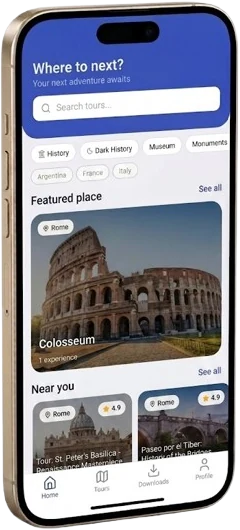
The stones of Colonia make much more sense when you know who laid them and who fought over them. Download Trevurs and walk "400 Years of War Between Spain and Portugal", a self guided audio tour that starts at the Portón de Campo and follows the town's story from the Portuguese founders to the birth of Uruguay, stop by stop. It is free, it works offline (useful when you do not want to pay for roaming), and it goes at your pace.
If you continue to the capital, Trevurs also has "The Avant-Garde Socialism Nobody Remembers" in Montevideo, about the reforms that made early 20th century Uruguay one of the most experimental countries in the world.