Cartagena Travel Guide: The Walled City, Getsemaní and the Islands
In 1741, a one-eyed, one-armed, one-legged Spanish admiral named Blas de Lezo held Cartagena against a British fleet of around 180 ships and roughly 23,000 men, and won. The walls, forts and narrow streets he defended are still here, and you can walk all of it in a couple of days. Cartagena de Indias is Colombia's best-preserved colonial city, a UNESCO World Heritage Site since 1984, and also one of the hottest, so plan around the sun.
How many days do you need?
Two full days cover the essentials: one for the Walled City and Getsemaní, one for the Castillo San Felipe de Barajas and the Convento de la Popa, or a boat trip. Three days let you add the islands without rushing. If you only have one, spend it on foot inside the walls.
The Walled City (Ciudad Amurallada)
The old town is a compact grid of balconies, bougainvillea and plazas, enclosed by about 11 km of walls built over roughly two centuries after pirates like Francis Drake sacked the city in 1586. Start at the Torre del Reloj (Clock Tower), the main gate, then drift through:
- Plaza de los Coches, once a slave market, now lined with arcades and sweet stalls.
- Plaza de Bolívar and the Palacio de la Inquisición, with its torture instruments and a very sober look at colonial justice. Entry is around 30,000 to 40,000 COP, verify before you go.
- Plaza de Santo Domingo, with the Botero sculpture of a reclining woman, and the Cathedral nearby.
- Calle de la Moneda, Calle del Arsenal and the quiet streets behind San Pedro Claver church, where the best photos happen.
Walk the top of the walls at sunset. It is free, the breeze finally shows up, and the Caribbean turns orange. Café del Mar on the wall is famous for sunset drinks, but expect crowds and high prices.
Getsemaní: the neighborhood with soul
Just outside the walls, Getsemaní was the working-class quarter and is now the city's most fun area. Murals cover almost every façade, Plaza de la Trinidad fills up with locals and travelers at night, and Calle de la Sierpe has a legendary story of a headless priest. Eat cheap here: arepas de huevo, empanadas and fried fish cost far less than inside the walls. Stay here if you want nightlife and a budget hotel, or inside the walls for quiet charm and higher prices.
Castillo San Felipe de Barajas
The biggest Spanish fortress in the Americas sits on the San Lázaro hill. Its tunnels were designed so that sound travelled and attackers could be heard. Tickets for foreigners have been reported at roughly 38,000 to 50,000 COP in recent years, and prices change, so check at the ticket office or the official fortifications site. Go early (it opens around 8:00) because there is almost no shade. Allow 1.5 to 2 hours. Colombians get occasional free days, but those are for nationals only.
The Rosario Islands and beaches
The Islas del Rosario, in a national park about an hour by speedboat from the city, are the classic day trip. Group tours usually cost from 150,000 to 300,000 COP depending on lunch and the island beach club, plus a port fee and a park entrance fee that are often charged separately, so ask what is included. Honest advice: the closest beaches in Bocagrande are crowded and not very clean, and the islands have the clear water. If you only visit once, choose a smaller group and avoid the busiest weekends. Playa Blanca on Barú is cheaper but very busy and has hawkers.
Practical tips
- When to go: December to April is the driest and breeziest. September to November brings the heaviest rain.
- Heat: expect 28 to 32 C with high humidity all year. Walk early, rest at midday, go out again at 4 pm.
- Getting around: the old town is walkable. Taxis have no meters in many cases, so agree the fare before getting in (a ride inside the center is usually around 10,000 to 15,000 COP).
- From the airport: Rafael Núñez airport is about 10 to 15 minutes from the Walled City by taxi.
- Money: carry some cash in Colombian pesos for street food and small shops.
- Scams: politely decline street sellers pushing "free" bracelets, hats or photos with palenqueras unless you want to pay. Agree the price first.
- Respect: the palenqueras with fruit bowls are part of the city's Afro-Colombian heritage. Photos usually cost a tip.
Explore Cartagena with Trevurs
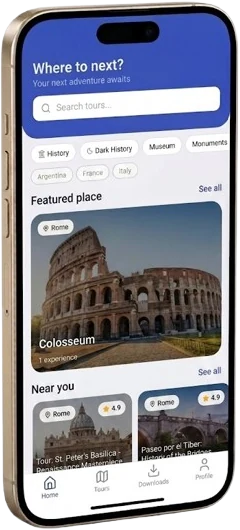
Cartagena's story is not only about colorful balconies. The city was also the main port of the slave trade in Spanish America and the seat of an Inquisition tribunal. The free, self-guided audio tour Dark Cartagena: The Slave Port and the Inquisition walks you through that history stop by stop, works offline, and costs nothing. Download it on Trevurs before you land so you don't need data in the narrow streets.