Budapest Travel Guide: Thermal Baths, Ruin Bars and the Danube
Budapest sits on more than 120 natural thermal springs, and the city has been soaking in them for two thousand years, first the Romans, then the Ottomans, who left behind domed bathhouses you can still use today. Here is how to build a trip around the water, the ruin bars and the river without wasting a day.
Széchenyi vs Gellért: which bath?
Széchenyi (City Park, Pest side) is the one on every postcard: a yellow neo-baroque palace with three big outdoor pools, steaming in winter, plus indoor thermal pools and saunas. It is huge, social and a bit chaotic. Prices are not consistent across sources and change with season and weekend surcharges, but expect roughly 10,000 to 14,000 HUF for a full-day locker ticket in 2026, with a cabin costing a few thousand forints more. Buy online on the official site, go on a weekday morning, and bring flip-flops and a towel (renting one is pricey).
Gellért (Buda side, next to the Liberty Bridge) is the Art Nouveau beauty with the stained glass and the mosaic hall. The catch: it closed for a major restoration in October 2025, and the reopening is currently announced for around 2028. Check the official site before you plan anything around it. Meanwhile, Rudas (a 10-minute walk away) is the best alternative: a 16th-century Ottoman dome, an eight-sided pool and a rooftop pool with Danube views. Weekday tickets run around 12,000 HUF, and the traditional thermal part has mixed-gender and single-gender days, so verify the schedule.
Quick rule: Széchenyi for the big outdoor party, Rudas for atmosphere and views, Lukács if you want a quieter local spot.
Ruin bars: what they are and where to start
Ruin bars (romkocsmák) began in the early 2000s in the crumbling Jewish Quarter (District VII), when people started turning abandoned buildings into bars full of mismatched furniture, bathtubs-as-sofas and graffiti. The original, Szimpla Kert, opened in 2002 and is still the one to see. Go in the afternoon for the courtyard and exploring, and at night if you want the crowd. Other good ones nearby are Instant-Fogas (a huge complex with dozens of rooms) and Szimpla's neighbors on Kazinczy utca.
Tips: beers are cheap by Western standards (a pint is often 1,200 to 1,800 HUF, verify on the menu), some venues add a service charge, and the busiest streets are full of tourist traps. Keep your phone in a front pocket. For a quieter drink, walk a few blocks away from Kazinczy utca.
The Danube: Buda vs Pest
The river splits the city in two. Buda is hilly and historic: Castle Hill, Matthias Church and the Fisherman's Bastion (the terrace itself is free, a few areas charge). Pest is flat, busy and where you will eat and drink. Cross on foot over the Chain Bridge, then walk up to the castle district or ride the funicular.
Two moves worth your time:
- Parliament from the water. The neo-Gothic building is best seen from the Buda embankment at sunset. Inside tours are popular and sell out, so book ahead, and note that EU and non-EU citizens pay different prices.
- Shoes on the Danube Bank. Sixty pairs of iron shoes mark where Jewish victims were shot into the river in 1944-45. It takes ten minutes and is one of the most moving places in the city.
A river cruise at night is touristy but genuinely pretty; short hop-on boats are cheaper than the dinner cruises.
Practical tips
- Getting from the airport: the 100E express bus runs between Liszt Ferenc airport and the center for about 2,500 HUF one way (the price rose in late 2025; verify at bkk.hu). A regular travel pass alone is not valid on it.
- Public transport: the 24-hour BKK travelcard costs around 2,750 HUF in 2026 (single tickets are about 500 HUF). Use the BudapestGO app.
- Money: Hungary uses the forint, not the euro. Pay by card where possible. Avoid street exchange booths with great-looking rates and always check the commission. If a taxi is needed, order with an app like Bolt or Főtaxi instead of hailing.
- Best time: spring and autumn for comfort. Winter is the most atmospheric for the baths, with steam rising into cold air.
- How many days: 3 is ideal. One for the castle and river, one for the baths and City Park, one for the Jewish Quarter and food.
Eat and drink like a local
Try lángos (fried dough with sour cream and cheese), goulash (a soup, not a stew, which surprises many visitors), chimney cake (kürtőskalács) and a glass of Tokaji sweet wine. The Great Market Hall is touristy but great for paprika and a quick lunch, with the upper floor cheaper for food. For better value, eat a block or two off the main squares.
What to skip
Skip the overpriced restaurants right on Váci utca, the street-side currency exchange booths, and any bath ticket sold by a reseller with an unusual markup. Also skip trying to see everything in one day: the baths alone can eat half of it.
Explore Budapest with Trevurs
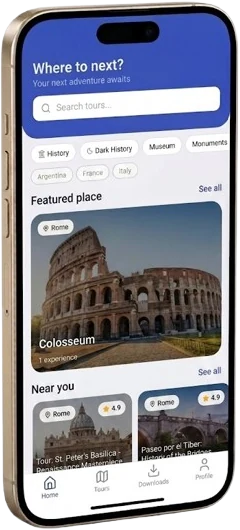
History is the other half of Budapest, and the city has more of it than most people expect. Trevurs has a free, self-guided audio tour, Budapest Under Two Dictatorships, that walks you through the Nazi and Soviet periods and the places that still carry their marks, right in the streets you will already be wandering. Download it before you go and it works offline, no roaming needed. Pair it with a morning at the baths and you have the best of both: relaxation and context.