Madrid's Best Neighborhoods: Where Locals Actually Hang Out
Madrid rewards visitors who treat neighborhoods as destinations in themselves, not just places to pass through between monuments. The city's center is compact enough to walk between all of the following in a single day, but each one deserves its own afternoon if you have the time - the character shifts completely from one to the next, sometimes within a few blocks. Here is where Madrileños actually spend their weekends.
La Latina: Tapas and Sunday Markets
La Latina is Madrid's tapas heartland, built around the narrow medieval streets near Cava Baja and Cava Alta. On weekday evenings the bars fill with locals doing exactly what the neighborhood is built for: standing, ordering a small plate and a glass of vermouth, and moving on. Many of these bars have been run by the same family for two or three generations, and the menu has barely changed in that time - which is exactly the point. On Sundays, El Rastro, Madrid's biggest flea market, takes over the surrounding streets with everything from antiques to secondhand clothing - arrive early, before the crowds and the pickpockets both peak around midday.
Malasaña: Counterculture and Vintage Everything
Malasaña was the epicenter of the Movida Madrileña, the explosion of art, music, and nightlife that swept Madrid after Franco's death in 1975, and the neighborhood has never quite lost that energy. Vintage clothing shops, independent record stores, and bars that stay interesting past midnight line streets like Calle del Pez and Calle San Vicente Ferrer. It is one of the few central neighborhoods that still feels resistant to being polished for tourism, even as rents climb around it.
Chueca: Madrid's LGBT+ Heart and a Serious Food Scene
Chueca has been the center of Madrid's LGBT+ community since the 1980s, and Pride here every summer is one of the largest in Europe. Beyond the nightlife, Chueca has quietly become one of the city's best neighborhoods for eating well - a dense cluster of small, ambitious restaurants that rarely appear on tourist lists but consistently draw Madrileños from across the city. The neighborhood's core, around Plaza de Chueca itself, is small enough to wander without a plan and still stumble onto something worth stopping for.
Lavapiés: Madrid's Most Multicultural Corner
Lavapiés is Madrid's most diverse neighborhood, shaped by decades of immigration from Latin America, North Africa, and South Asia, and it shows in the food: you can find genuinely good Senegalese, Bangladeshi, and Venezuelan food within a few blocks of each other. La Casa Encendida, a cultural center with free exhibitions, anchors the neighborhood's art scene, and the street art here is some of the most consistently interesting in the city, changing often enough that a return visit rarely looks the same.
Salamanca: Where Madrid Gets Polished
Salamanca is Madrid dressed up - wide, elegant streets, high-end boutiques, and the kind of quiet wealth that does not need to advertise itself. It is worth an afternoon even if shopping is not the point: the architecture along Calle de Serrano and the streets around it is some of the most consistent and elegant in the city, and it borders Retiro Park directly.
Chamberí: The Neighborhood Madrileños Keep to Themselves
Chamberí rarely makes visitor itineraries, which is precisely its appeal - it is a residential, upper-middle-class neighborhood with quiet plazas, traditional taverns that have not changed their menus in decades, and the Andén 0 museum, a preserved 1919 metro station you can only visit on a guided tour. It sits just north of the center and is easy to fold into a day that starts in Malasaña, giving you a version of Madrid built for the people who actually live there rather than for visitors.
Practical Tips for Neighborhood-Hopping
- Most of these neighborhoods are walkable from each other. La Latina, Malasaña, Chueca and Lavapiés all sit within a 20-25 minute walk of Puerta del Sol.
- Go to El Rastro early on Sunday. By noon the crowds make it hard to actually browse the stalls.
- Dinner starts late everywhere. Restaurants in these neighborhoods rarely fill up before 9:30pm, and many bars do not get going until closer to midnight.
- Book Andén 0 in Chamberí ahead of time. Tours run in limited groups and are free, but slots fill up during busy months.
Explore Madrid's Neighborhoods with Trevurs
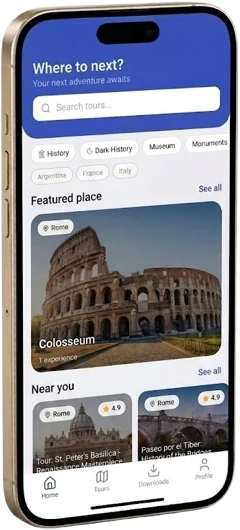
Guidebooks tend to compress Madrid's neighborhoods into a single "best tapas bar" recommendation and move on. Trevurs takes the opposite approach: a free audio tour of La Latina, recorded by people who actually live there, walking you through the streets and explaining why this particular corner of Madrid became what it is, one bar and one plaza at a time. Download the app before you go and let a local fill in what the map cannot show you.