Acropolis Guide: Tickets, Best Time and the Museum to See First
The Acropolis caps entry at around 20,000 visitors a day, and on a summer morning it can feel like all of them chose your time slot. The good news: the site is timed, the rules are simple, and a little planning turns a sweaty queue into one of the best two hours you will spend in Europe.
Tickets and timed entry
Entry to the Acropolis is by timed slot, so book ahead on the official Greek ticketing portal (hhticket.gr) instead of a reseller. Third-party guides disagree on prices, so verify the current fare on the official site before you pay. Most 2026 guides quote about €30 for a standard adult ticket (reduced fares exist, and some visitors enter free with valid ID). Resellers sell the same entry bundled with a guide for roughly €36 to €37, which is only worth it if you want the guide.
There is also a multi-site pass that covers the Acropolis plus several other ancient sites (Ancient Agora, Roman Agora, Temple of Olympian Zeus and others), valid for about five days. If you plan to see more than two of them, it usually saves money. Check the exact list and price when you book.
Your slot gives you a window to enter, roughly 15 to 30 minutes either side depending on the season. After that you can stay as long as the site is open.
Best time to go
The summer schedule runs from 8:00 to 20:00, with last entry about 30 minutes before closing. Hours shorten gradually through September and October, and from 1 November the site closes at 17:00. It is closed on 1 January, 25 March, 1 May, Orthodox Easter Sunday and 25 and 26 December.
- First slot of the day (8:00): the best choice from May to September. Cooler, softer light, far fewer tour groups.
- Last two hours before closing: the second best. Crowds thin out and the marble turns golden.
- Avoid 10:00 to 15:00 in July and August. The rock has almost no shade and temperatures regularly pass 38 °C.
Heat matters more than most people expect. The Ministry of Culture has shut the site during the hottest hours in several recent summers (including July 2023, 2024 and 2025). Closures are announced with little notice, so check the news the day before and keep a backup plan.
Getting there and getting in
The easiest approach is the pedestrian street Dionysiou Areopagitou, from Acropoli metro station (red line, Line 2). Most people use the main entrance on the south slope, which is also where the queue forms. There is a second entrance near the Theatre of Dionysus, often quieter, and the pre-booked slot lets you skip the ticket line either way.
Bring water (there are fountains, but few), a hat, sunscreen and shoes with real grip. The marble is polished smooth by 2,500 years of feet and it is slippery, especially after rain. Large bags and tripods are not welcome, and drones are banned.
What to see once you are up there
Count on 1.5 to 2 hours. Walk the path in this order: the Propylaea (the monumental gate), the tiny Temple of Athena Nike, the Parthenon, the Erechtheion with its Caryatid porch, and then the viewpoint toward the Theatre of Dionysus and the Temple of Olympian Zeus. Expect scaffolding on the Parthenon, since restoration has been running for decades.
Do not skip the walk down. The slope passes the Theatre of Dionysus, where Greek drama was born, and the Odeon of Herodes Atticus, still used for summer concerts.
The museum you should see first
Here is the tip most visitors learn too late: go to the Acropolis Museum before you climb. At the top you see the empty ruins. In the museum, at the foot of the hill, you see what stood there: the original Caryatids, the Parthenon frieze displayed on the same orientation as the temple, and the Archaic statues that were buried after the Persians sacked the city in 480 BC. Having seen them, the ruins make sense instead of just looking like impressive stones.
The museum is a separate site with its own ticket, and you buy it on its own website. Sources disagree on the price (somewhere around €15 to €20), so verify it before going. Opening hours are usually 9:00 to 17:00, with longer evening hours on Fridays in summer, and it closes on Mondays in winter. Plan 1.5 hours. The glass floor over an excavated ancient neighborhood is worth a look on the way in.
A sensible plan
- Morning: Acropolis Museum, then lunch nearby in Makrygianni.
- Late afternoon: Acropolis, entering about two hours before closing.
- Sunset: walk up Philopappos Hill (free) for the classic view of the Parthenon, the same one on this page's cover.
Explore Athens with Trevurs
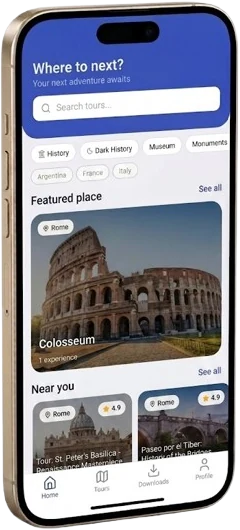
Trevurs has free, self-guided audio tours that work offline, which is handy when the signal drops among the ruins. Try The Acropolis: Democracy, Gods and War for the story of the rock stop by stop, and Dark Athens: The Democracy That Condemned Socrates for the darker side of the city that invented voting. Download them on hotel wifi and walk at your own pace.