3 Days in Tokyo: A First-Timer Itinerary by Neighborhood
Shinjuku Station moves around 3.5 million passengers a day, roughly the entire population of Uruguay, and it has over 200 exits. That single number explains the main mistake first-timers make in Tokyo: they treat it like one city and zigzag across it. Tokyo is really a cluster of towns stitched together by train lines, and three days is enough only if you see it one zone at a time.
This itinerary splits the city into three blocks: the old east (Asakusa, Ueno, Akihabara), the young west (Harajuku, Shibuya, Shinjuku) and the imperial center (Tsukiji, Ginza, the Imperial Palace). Each day keeps you inside a short radius.
Before You Start: Transport and Timing
- Get an IC card. Suica or PASMO, on your phone (Apple Wallet or Google Wallet) or as a physical card, works on every train, subway and bus, plus convenience stores and vending machines.
- Tokyo Subway Ticket: the official prices are ¥1,000 for 24 hours, ¥1,500 for 48 hours and ¥2,000 for 72 hours. It covers all Tokyo Metro and Toei lines but not JR lines (like the Yamanote loop). It pays off if you take four or more subway rides a day, which this itinerary usually does.
- Start early. Temples and shrines open at dawn and are empty before 8 a.m. Shops and malls rarely open before 10 or 11. Use the mornings for the sights, the afternoons for shopping and the nights for eating.
- Check the closing days. The Imperial Palace East Gardens close on Mondays and Fridays, so if your trip lands on those days, swap Day 3 with another day.
Day 1: Old Tokyo (Asakusa, Ueno and Akihabara)
Morning: Asakusa and Senso-ji
Start at Senso-ji, Tokyo's oldest temple. Legend says two fishermen pulled a small statue of Kannon from the Sumida River in 628, and the temple was built to house it. That statue has never been shown to the public. The grounds are open around the clock; the main hall opens at 6 a.m. (6:30 from October to March) and closes at 5 p.m.
Walk in through the Kaminarimon (Thunder Gate) with its giant red lantern, then down Nakamise-dori, a shopping street of about 90 stalls selling rice crackers, fans and ningyo-yaki (little sponge cakes filled with red bean). Arrive before 9 a.m. and you will have photos without crowds.
What most visitors don't realize is that almost nothing here is old. Asakusa burned in the 1923 Great Kanto Earthquake and again in the firebombing of March 1945. The five-story pagoda and main hall you see are postwar reconstructions in concrete. Trevurs has two free audio tours that start right here: "Asakusa: the District That Burned Twice and Opened Again on Monday" walks you through the temple, the old entertainment streets and the river; "Tokyo, 10 March 1945: the Deadliest Air Raid in History" follows the Sumida to the bridges and memorials of that night.
Afternoon: Ueno Park and Yanaka
Take the Ginza Line three stops to Ueno. The park holds the Tokyo National Museum, the best place in the country to see real samurai armor, swords and screens (closed most Mondays; check the calendar). If museums are not your thing, walk 15 minutes north to Yanaka, one of the few neighborhoods that survived the war: wooden houses, small temples, cats and the Yanaka Ginza shopping street.
Ueno is also where the last loyalists of the shogun made their stand in 1868. The Trevurs tour "The Last Samurai: How Japan Shut Down for 250 Years and Then Opened All at Once" connects Senso-ji, Yanaka, Ueno Park and the National Museum before crossing to the Meiji Shrine.
Evening: Akihabara
Two stops south on the Yamanote Line, Akihabara lights up after dark. Retro game shops, multi-floor arcades, figure stores, maid cafés and electronics markets fill every block. The free tour "Akihabara: From Black-Market Radios to the Manga That Conquered the World" explains how a postwar black market for radio parts became the world capital of anime.
Day 2: Young Tokyo (Harajuku, Shibuya and Shinjuku)
Morning: Meiji Shrine and Harajuku
Arrive at Meiji Jingu as the gates open at sunrise. The shrine honors Emperor Meiji, the man who turned a feudal country into an industrial power in a single generation. The forest around it looks ancient, but it was planted from scratch around 1920 with roughly 100,000 trees donated from all over Japan. Entry is free.
The Trevurs tour "The Meiji Era: the Country That Reinvented Itself in One Generation" begins in that manufactured forest and tells how Japan copied railways, uniforms and constitutions from the West in a few decades.
From the shrine, step out onto Takeshita-dori for crepes and street fashion, then walk down Omotesando, Tokyo's tree-lined avenue of designer architecture.
Afternoon: Shibuya
Walk or take one stop to Shibuya. Say hello to the Hachiko statue, then cross the Scramble Crossing, where up to 3,000 people can cross at once when the lights turn.
For the full panorama, Shibuya Sky sits on top of Shibuya Scramble Square at about 230 meters. The official Tokyo tourism site lists online adult tickets at ¥2,700 before 3 p.m. and ¥3,400 after, with counter prices higher. Sunset slots sell out, and tickets go on sale about two weeks ahead, so book early. The deck closes in bad weather.
Evening: Shinjuku
End the day in Shinjuku. Before dinner, ride up the Tokyo Metropolitan Government Building, where the 45th-floor observation decks are free (the South deck stays open until about 10 p.m.; check closing days). Then eat yakitori in Omoide Yokocho, a smoky alley of tiny grill counters by the station, and finish with a drink in Golden Gai, around 200 bars squeezed into six lanes. Many bars charge a seating fee of ¥500 to ¥1,500.
Next door is Kabukicho, the neon district named after a kabuki theater that was never built. The Trevurs tour "Yakuza: Organised Crime With a Nameplate on the Door" tells how Japan's gangs once had offices with signs on the door and ends here, among the lights of Shinjuku.
Day 3: Imperial Tokyo (Tsukiji, Ginza and the Palace)
Morning: Tsukiji Outer Market
The wholesale tuna auction moved to Toyosu in 2018, but the Tsukiji Outer Market stayed. Go hungry at around 8 a.m. for tamagoyaki on a stick, grilled scallops and sushi breakfast. Many stalls close by early afternoon, and plenty close on Sundays and Wednesdays.
Midday: Ginza and the Imperial Palace
Walk 15 minutes to Ginza, Tokyo's grand shopping avenue. On weekend afternoons the main street (Chuo-dori) closes to traffic and becomes a pedestrian promenade.
Then head to the Imperial Palace East Gardens, free and with no booking needed. This is where Edo Castle, seat of the Tokugawa shoguns, once stood. Its main keep burned in 1657 and was never rebuilt, so you walk among stone walls, moats and gardens. Remember: closed Mondays and Fridays.
The free Trevurs tour "Edo: the City of a Million People Europe Didn't Know Existed" covers this area, from the castle walls to Nihonbashi, the bridge that still marks kilometer zero for Japan's roads.
Afternoon: Tokyo Station or Sengaku-ji
Finish at Tokyo Station, whose red-brick Marunouchi building from 1914 was restored to its original domes in 2012.
If you still have energy, ride to Sengaku-ji in Shinagawa, the temple where the 47 ronin are buried. People still leave incense on their graves more than three centuries after their revenge. The tour "The 47 Ronin: Japan's Most Famous Revenge and What It Says About Honour" tells the whole story.
What to Skip and What to Swap
- Skip overpriced themed shows and character cafés if you are short on time. Tokyo's best experiences are free: shrines, gardens, street food alleys and observation decks.
- Swap Shibuya Sky for the free Metropolitan Government decks if you are on a budget.
- Add Tokyo Skytree only if you skip Shibuya Sky; you don't need both.
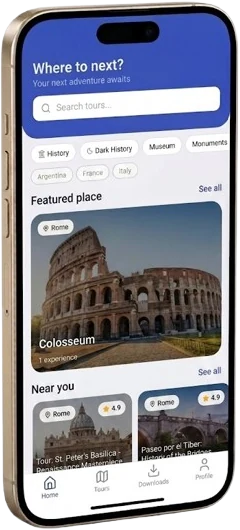
Explore Tokyo with Trevurs
Trevurs has eight free self-guided audio tours in Tokyo, and almost every stop in this itinerary has one waiting for you: Asakusa, the 1945 air raid, Akihabara, the Last Samurai, the Meiji Era, the Yakuza, Edo and the 47 Ronin. Download them before you fly: they work offline, so you can follow the story through Tokyo's streets without a data plan, at your own pace.