3 Days in New York: The First-Timer Itinerary That Actually Works
Manhattan is only 2.3 miles (3.7 km) across at its widest point, but it runs 13.4 miles (21.6 km) from top to bottom. That shape is the reason most first-time itineraries fall apart. People book the Statue of Liberty for the morning, Central Park for lunch, a Brooklyn pizza for the afternoon and a Broadway show at night, and they spend two hours a day underground on trains going up and down the island. The Statue of Liberty ferry dock and the southern edge of Central Park are more than 4 miles apart.
The fix is simple: give each day one zone. Day 1 is Downtown, Day 2 is Midtown and Central Park, Day 3 is Brooklyn and the Village. You still see the big names, you walk most of the time, and you only ride the subway to start and end the day.
Before You Go: Transport and Tickets
- Subway: a ride costs $3.00 if you tap a contactless card or phone at the OMNY readers. Use the same card all trip: after 12 paid rides in seven days, the rest of the week is free (a cap of about $35). There is no need to buy a MetroCard or a pass.
- Book ahead: the Statue of Liberty ferry (about $25.50 for adults with Statue City Cruises, the only official operator) and any observation deck. Crown access sells out months in advance.
- Free stuff that is actually good: the 9/11 Memorial pools, the Brooklyn Bridge walkway, Central Park, Grand Central and the Staten Island Ferry.
- Prices change. Confirm on the official sites before you pay.
Day 1: Downtown (Statue of Liberty, Wall Street, 9/11 Memorial)
Morning: the islands. Take the first ferry from Battery Park, around 9:00 a.m. Security is airport-style and the lines grow fast after 10. The boat stops at Liberty Island first and then at Ellis Island. Most people rush Ellis Island, which is a mistake: the registry room where around twelve million immigrants were processed between 1892 and 1954 is one of the most moving rooms in the country. Plan on four to five hours for both islands. If you only want the view, the Staten Island Ferry is free, runs 24 hours and passes close to the statue; the round trip takes about an hour.
Lunch and early afternoon: the Financial District. Back in Battery Park, walk five minutes up Broadway. Wall Street is a narrow canyon, not a boulevard, and that surprises everyone. See Federal Hall (where George Washington took the oath in 1789), the New York Stock Exchange facade and Trinity Church, whose churchyard holds Alexander Hamilton.
Late afternoon: the 9/11 Memorial. The two pools sit in the exact footprints of the Twin Towers, and the plaza is free. The museum below needs a timed ticket (roughly $33 to $36 for adults, check the official site) and about two hours.
Evening: Chinatown and Little Italy. It is a 20 minute walk north. Eat dumplings on Mosco or Doyers Street, the sharp bend that was once called "the Bloody Angle", then cross to Mulberry Street for dessert. Collect Pond Park, a few blocks west, sits on the site of Five Points, the slum that inspired Gangs of New York.
Day 2: Midtown and Central Park
Morning: Central Park. Start at Columbus Circle or Fifth Avenue and 59th Street before the crowds. The park looks wild, but almost every rock, lake and hill was designed and built by Frederick Law Olmsted and Calvert Vaux from 1858. A good two hour loop: the Mall, Bethesda Terrace and Fountain, Bow Bridge, Strawberry Fields and the Ramble.
Midday: one museum, not three. The Metropolitan Museum of Art sits on the park's east edge. Visitors from outside New York State pay a fixed ticket (around $30; New York residents pay what they wish). Pick two or three wings (the Temple of Dendur and the European paintings are a classic combo) and leave after three hours. Trying to "do" the Met is how Day 2 dies.
Afternoon: walk down Fifth Avenue. From the Met, take the subway or a bus down to 59th Street and walk south. Stops in order: the Plaza Hotel, St. Patrick's Cathedral, Rockefeller Center, the New York Public Library and Bryant Park, then east on 42nd Street to Grand Central Terminal. Look up at the backwards zodiac on the ceiling and find the Whispering Gallery near the Oyster Bar.
Sunset: pick one observation deck. You do not need two. Top of the Rock (from about $45, more at sunset) has the best view because the Empire State Building is in it. The Empire State Building is the classic, and the Chrysler Building, two blocks from Grand Central, is the prettiest skyscraper in the city from the street. All three were finished between 1930 and 1933, in the middle of the Depression.
Night: Times Square and Broadway. Walk over once it is dark, which is when Times Square makes sense. For cheaper same-day show tickets, try the TKTS booth under the red steps or the official lottery apps.
Day 3: Brooklyn and Greenwich Village
Early morning: walk the Brooklyn Bridge. Go before 8:30 a.m.; by mid-morning the walkway is shoulder to shoulder. Start at City Hall (subway to Brooklyn Bridge-City Hall) and walk toward Brooklyn: the bridge is about 1.1 miles (1.8 km), roughly 30 to 40 minutes with photo stops. When it opened in 1883 it was the longest suspension bridge in the world, and a parade of 21 elephants crossed it in 1884 to prove it was safe.
Morning: DUMBO and Brooklyn Bridge Park. Exit toward DUMBO and take the famous photo on Washington Street, with the Manhattan Bridge framed between brick warehouses. Then walk down to the piers for the skyline view you see on postcards (and on this page).
Midday: Williamsburg by water. From the DUMBO pier, the NYC Ferry East River route runs up to North Williamsburg in about 15 minutes. The single fare rises to $5 from October 2026. Williamsburg mixes Hasidic streets in the south, warehouse breweries and vintage shops in the north, and one of the best Manhattan views from Domino Park.
Afternoon: back to Manhattan on the L. The L train from Bedford Avenue takes you under the river to 14th Street in a few minutes. Walk down to Greenwich Village: Washington Square Park and its arch, the crooked streets west of Sixth Avenue, and the Stonewall Inn on Christopher Street, where the 1969 uprising started the modern LGBTQ rights movement. It is a national monument today.
Evening: dinner in the West Village and, if you still have energy, the High Line at sunset (its south entrance is at Gansevoort Street, about 15 minutes away).
What to Skip on a First Trip
- Fake "free" Statue of Liberty tickets sold by people in costumes around Battery Park. Only Statue City Cruises lands on the islands.
- Times Square restaurants. Walk two avenues west to Hell's Kitchen and eat better for less.
If you have a fourth day, use it for Harlem (Sunday gospel and the Apollo), the Bronx, or the boardwalk at Coney Island.
Explore New York with Trevurs
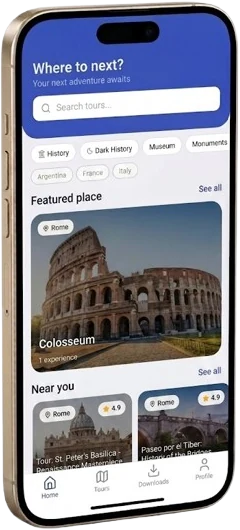
Trevurs has free, self-guided audio tours that work offline, so you can follow them zone by zone:
- Day 1: "The Statue of Liberty: France's Gift That Took Twenty-One Years to Arrive", "Ellis Island: the Door Twelve Million People Walked Through", "Wall Street: the Week in 1929 When Money Dragged the World Down", "New York: the 102 Minutes of September 11 and the World That Came After", "Chinatown and Little Italy: When Manhattan Was a Patchwork of Villages" and "Five Points: the Most Feared Neighborhood of 19th-Century New York".
- Day 2: "Central Park: the Wilderness That Was Built Stone by Stone", "New York: the Race to the Sky That Was Won in the Depths of the Depression" and "Times Square: A Century of Spectacle, Decay and Makeover".
- Day 3: "Brooklyn: the City That Voted Itself Out of Existence and Became World Famous", "Williamsburg: Hasidim, Hipsters and the Brooklyn Nobody Quite Understands" and "Stonewall and Greenwich Village: the Night That Changed Civil Rights".
Download them before you fly, put on your headphones and let each neighborhood explain itself while you walk.