3 Days in Kyoto: Temples, Gion and How to Beat the Crowds
Fushimi Inari never closes. The shrine has no gate, no ticket booth and no opening hours, which means the tunnel of vermilion torii that has thousands of people elbowing each other at 11 a.m. is almost empty at 7 a.m. That single fact sums up how to do Kyoto in three days: the city is not too crowded, it is crowded at the wrong times. Move your big sights to the edges of the day and Kyoto gives you back the version you saw in the photos.
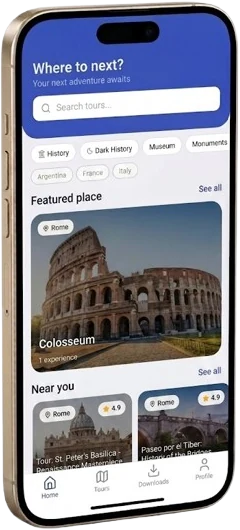
This itinerary groups the city into three zones (Fushimi and Higashiyama, Arashiyama and the northwest, and the eastern hills) so you spend your time walking, not sitting in buses. It also folds in the four free Trevurs audio tours of Kyoto, so every stop comes with the story behind it.
Before You Go: Kyoto's New Hotel Tax
Since March 1, 2026, Kyoto charges the highest accommodation tax in Japan. It is per person, per night, and depends on the room rate:
- Under ¥6,000: ¥200
- ¥6,000 to ¥19,999: ¥400
- ¥20,000 to ¥49,999: ¥1,000
- ¥50,000 to ¥99,999: ¥4,000
- ¥100,000 and up: ¥10,000
Most mid-range travelers will pay ¥400 to ¥1,000 per person per night, usually at check-in and often not included in the price you saw online. The city says the money goes to transport, waste management and heritage protection. Check Kyoto City's official tax page if your booking sits near a threshold.
Day 1: Fushimi Inari at Dawn, Then Gion to Kiyomizu-dera
7:00 Fushimi Inari Taisha. Take the JR Nara Line from Kyoto Station to Inari (two stops, about 5 minutes). Entry is free and the shrine is open 24 hours. The famous Senbon Torii (the double tunnel) is just behind the main hall, but the real reward is higher up: past the Yotsutsuji intersection, about 40 minutes uphill, the crowds disappear and you get a view over the whole city. The full loop to the 233-meter summit takes 2 to 3 hours; Yotsutsuji and back takes about 90 minutes and is enough for most people. Each gate was donated by a person or a company, and the name and date are painted on the back.
11:00 Gion and Pontocho. Head back to the center and start the Trevurs tour "Gion: the Closed World of the Geisha That Survived the Twentieth Century" at the Minamiza theater by Shijo Bridge. It walks you through Pontocho alley, the Shirakawa canal and Tatsumi Bridge, the okiya houses of Shinbashi, Yasaka Shrine and Hanamikoji, where the Ichiriki teahouse has been turning away strangers for three centuries.
A warning: since 2024 the private lanes off Hanamikoji in Gion Kobu have banned photography, with signs announcing fines of ¥10,000. Stay on the main street, and never follow or block a geiko or maiko for a photo.
Afternoon: Kennin-ji, Ishibe-koji and Sannenzaka. The same tour continues to Kennin-ji, Kyoto's oldest Zen temple (small fee, famous for its twin-dragon ceiling), the Yasui Konpiragu shrine where people crawl through a stone to cut bad relationships, and the quiet stone lane of Ishibe-koji. Then climb Ninenzaka and Sannenzaka toward the Yasaka Pagoda.
Late afternoon: Kiyomizu-dera. The tour ends here, and timing is your best weapon. The tour buses leave around 4:30 p.m., and the wooden stage over the valley catches the last light. Admission is around ¥400 to ¥500 (sources differ, check on site). Dinner in Pontocho, along the river.
Day 2: Arashiyama, Golden Pavilion and the Samurai City
7:30 Arashiyama bamboo grove. Take the JR Sagano Line from Kyoto to Saga-Arashiyama (about 15 minutes). The bamboo path is free and always open, and before 8 a.m. you can actually hear the stalks creak. At 10 a.m. it is a queue.
This is also the first stop of the Trevurs tour "Kyoto: The Samurai and the Japan That Almost Vanished", which follows the city from the shoguns to the last samurai. Use it as the spine of the day.
8:30 Tenryu-ji. The garden opens at 8:30 (about ¥500, halls extra). Its pond garden was designed in the 14th century by the Zen monk Muso Soseki and has barely changed since.
10:30 Ryoan-ji and Kinkaku-ji. A taxi or bus takes you to Ryoan-ji (¥600), whose rock garden has fifteen stones arranged so you can never see all of them from any point on the veranda. Then walk or take a short bus to Kinkaku-ji, the Golden Pavilion (¥500). The current building is a 1955 rebuild: a monk burned the original in 1950, a story Yukio Mishima turned into a novel.
Afternoon: Nijo Castle and downtown. Nijo Castle (¥1,300 with the Ninomaru Palace) is where the Tokugawa shoguns stayed in Kyoto and where the last one handed power back to the emperor in 1867. Listen for the "nightingale floors" that squeak to announce intruders. The samurai tour then takes you to Honno-ji, the Ikedaya inn site where the Shinsengumi raided rebel samurai in 1864, and Nishiki Market. Go to Nishiki before 5 p.m.: many stalls close early, and eating while walking is discouraged.
Day 3: The Eastern Hills and Zen Kyoto
8:00 Nanzen-ji. The grounds are free and open early, and the brick aqueduct from the 1890s is one of the most photographed corners of the city. Here starts the Trevurs tour "Kyoto Zen: Fifteen Stones No One Can See at Once".
9:30 Philosopher's Path to Ginkaku-ji. A 2-kilometer canal walk named after the philosopher Nishida Kitaro, who walked it every day. At the end is Ginkaku-ji, the Silver Pavilion, which was never covered in silver. Its fee was reported to rise to ¥1,000 in 2026, so check before you go. Add Shisen-do, a tiny hermitage with a raked sand garden that most tour groups skip.
Afternoon, option A: Daitoku-ji. Continue the Zen tour north to Daitoku-ji, a walled complex of sub-temples where the tea master Sen no Rikyu fell out with Toyotomi Hideyoshi. Daisen-in and Zuiho-in (with its hidden Christian cross in the garden) are quiet even in high season.
Afternoon, option B: Honno-ji. If you prefer history to gardens, walk downtown with "Honno-ji: the Dawn They Betrayed the Man Who Was About to Unify Japan". It tells the story of June 21, 1582, when Oda Nobunaga was attacked by his own general Akechi Mitsuhide, and takes you from the original temple site (now just a stone marker in a residential street) to the rebuilt Honno-ji, the Mimizuka mound and the castles that came after.
Want the Moss Temple? Saiho-ji, the last stop of the Zen tour, only admits visitors by advance application, usually weeks ahead, with a fee of several thousand yen. Plan it before you fly.
How to Beat the Crowds
- Big sights at the edges of the day. Fushimi Inari and Arashiyama before 8 a.m., Kiyomizu-dera after 4:30 p.m.
- Avoid buses at midday. The flat fare is ¥230, but routes 100 and 206 are packed. Use the subway and JR lines plus walking. The Subway and Bus 1-Day Pass costs about ¥1,100. Kyoto plans higher bus fares for non-residents from 2027, so this may change.
- Send your luggage. Big suitcases on city buses are a local complaint. Use the hands-free services at Kyoto Station or forward bags with a takkyubin service.
- Go on weekdays for Kinkaku-ji and Arashiyama, and avoid Japanese holidays.
- Skip the queues you don't need. The Arashiyama Monkey Park and the Sagano Romantic Train are fun but eat half a day if you only have three.
Where to Stay
For a 3-day trip, stay near Kyoto Station (easy for Fushimi Inari, JR to Arashiyama and arrival day) or around Shijo and Kawaramachi (walk to Gion and Pontocho at night). Remember the hotel tax when comparing prices.
Explore Kyoto with Trevurs
Kyoto rewards people who know what they are looking at. Download Trevurs and take the four free audio tours of the city: "Gion: the Closed World of the Geisha That Survived the Twentieth Century", "Kyoto: The Samurai and the Japan That Almost Vanished", "Kyoto Zen: Fifteen Stones No One Can See at Once" and "Honno-ji: the Dawn They Betrayed the Man Who Was About to Unify Japan". They are self-guided, work offline and let you start at 7 a.m., before any guided group has even left the hotel.