3 Days in Berlin: Itinerary for History, Neighborhoods and Nightlife
Berlin is about nine times bigger than Paris in area, and it has no single center. It grew from a dozen towns stitched together, then spent 28 years cut in half by a wall. That is why a good Berlin itinerary is not a list of sights but a set of neighborhoods, each with its own personality. This plan gives you three days that follow that logic, so you spend your time exploring and not riding the U-Bahn in circles.
Before You Go: Getting Around
Berlin's public transport covers zones A, B and C, and a single ticket for A and B costs roughly 3.50 euros in 2026 (check bvg.de before you travel). For three days, a 72-hour pass or the Berlin WelcomeCard usually beats buying singles. The Deutschlandticket (63 euros per month in 2026) only makes sense if you stay a full month. Always validate paper tickets, because inspectors are common and fines run around 60 euros.
The airport BER connects to the center by train in about 30 minutes. Stay in Mitte for a first visit, or Kreuzberg and Friedrichshain if nightlife matters more than sightseeing.
Day 1: Historic Mitte
Start at the Brandenburg Gate early, when the square is quiet. Walk to the nearby Holocaust Memorial (free, open all day), 2,711 concrete slabs that you should wander through slowly. Then book the Reichstag dome: entry is free, but you must register on the official Bundestag visitor site, often weeks ahead, and bring your passport or ID. Slots open about three months in advance. Never pay a reseller for it.
After lunch, walk down Unter den Linden to Museum Island. You cannot see it all, so pick one or two: the Pergamon Museum (check which halls are open, as it has been under long renovation), the Neues Museum with Nefertiti, or the Altes Nationalmuseum. Day tickets are around 10 to 14 euros per museum, and a combined Museum Pass Berlin exists if you want three or more (verify the current price). End at the Berlin Cathedral steps or a beer by the Spree.
Evening: dinner around Hackescher Markt and its courtyards, the Hackesche Hofe.
Day 2: The Wall, Kreuzberg and Nightlife
Morning at the Berlin Wall Memorial on Bernauer Strasse, the best place to understand how the border actually worked: watchtower, death strip and preserved section, all free. Take the tram M10 or the S-Bahn to East Side Gallery, 1.3 km of the Wall covered in murals. Go before 10:00 to avoid the crowds and the selfie lines at the famous kiss painting.
Cross the Oberbaumbruecke into Kreuzberg. For lunch, skip the famous kebab queues if you are in a rush and try a Turkish bakery on Oranienstrasse, or browse the Markthalle Neun on its street food Thursday. Spend the afternoon at Checkpoint Charlie only briefly (it is more photo stop than museum), then walk the Topography of Terror, an open-air exhibit on the old Gestapo site, free to enter.
Night: Berlin clubs are legendary, and entry is decided at the door. Go in a small group, dress casually and dark, do not announce that you want to party, and expect no phones allowed inside. Bars in Kreuzberg and Neukoelln are an easier, cheaper alternative, and many are open until dawn.
Day 3: Green Berlin and Local Life
Take the S-Bahn to Tiergarten, the huge central park, and climb the Victory Column for a view over the city (a few euros). Then head to Charlottenburg Palace if you like baroque, or the KaDeWe department store for its food hall.
Alternatively, spend the day in Prenzlauer Berg: Sunday flea market at Mauerpark, cafes on Kastanienallee, and the leafy Kollwitzplatz. If you prefer history, a day trip to Potsdam (35 minutes by regional train, covered by the AB and C zones) gives you Sanssouci Palace and its gardens. Book the palace slot ahead in summer.
What to Skip and What to Save
- Skip the Currywurst traps near Checkpoint Charlie. Better versions are at Curry 36 or Konnopke's Imbiss under the Prenzlauer Berg U-Bahn viaduct.
- Save money on food with the Doener kebab (around 6 to 8 euros) and bakery breakfasts. Tap water is excellent.
- Cash still matters. Many small bars and cafes are card-free, so carry some euros.
- Best months: May to September for weather, December for Christmas markets. Winter is gray and cold but cheaper.
Explore Berlin with Trevurs
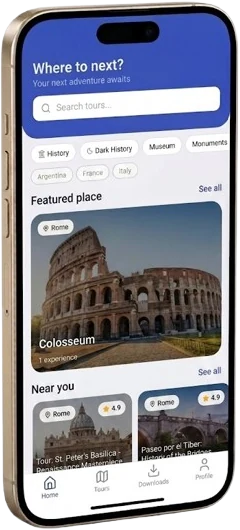
Walking Berlin works best when someone explains what you are looking at, because so much of the history is invisible: a line of cobblestones, an empty lot, a plaque. Trevurs has two free, self-guided audio tours that fit neatly into this itinerary and work offline: Nazi Berlin: From the Reichstag to Hitler's Bunker and The Berlin Wall: 28 Years of a Divided City. Download them before you go, put in your earphones and let the city talk.