2 Days in Venice: An Itinerary That Escapes the Crowds
The word "ghetto" was born in Venice, in a quiet square in Cannaregio about ten minutes on foot from the train station. In 1516 the Republic confined the city's Jewish population to an island next to an old copper foundry, the getto, and the name stuck to every ghetto that came after. Most visitors walk straight past it, following the yellow signs that say "Per Rialto" and "Per S. Marco" along with tens of thousands of other people.
That is the key to two good days in Venice. The historic center has fewer than 50,000 residents, but the crowds are concentrated on one narrow corridor between the station, the Rialto Bridge and Piazza San Marco. Step two canals away from it and you get washing lines, kids playing football in a campo and a glass of wine for a couple of euros. This itinerary uses Cannaregio and Castello as its base, saves the famous sights for the hours when the day-trippers are gone, and gets you around by vaporetto instead of fighting the main route on foot.
Before you go: tickets, passes and the access fee
Vaporetto passes. A single ACTV ticket costs around €9.50 and is valid for 75 minutes. Time passes are much better value: roughly €25 for 24 hours, €35 for 48 hours and €45 for 72 hours. For two days, the 48-hour pass pays for itself after four rides, and you will easily do more than that. Buy it from the official ACTV/Venezia Unica site or the machines at the stops (resellers add a fee), and validate the card on the reader every time you board. Travelers aged 6 to 29 can get a cheaper youth pass with the Rolling Venice card; check the current price before you buy.
The access fee. On selected peak days Venice charges day-trippers an entry fee. In 2026 it applied on 60 days between April 3 and July 26, from 8:30 a.m. to 4 p.m., at €5 if booked at least four days ahead and €10 after that. If you sleep in the city you don't pay it, because your hotel already charges the tourist tax, but you still need to request the exemption QR code online. The 2027 calendar was not confirmed at the time of writing, so check the official portal before you travel.
Where to stay. A hotel or apartment in Cannaregio, near Fondamenta della Misericordia or Fondamenta degli Ormesini, is ideal: it is quiet at night, close to the station for luggage, and full of bacari. Castello, near Via Garibaldi, is the other good option.
Day 1: Cannaregio and the Republic
Morning: the Ghetto. Start early in the Campo del Ghetto Nuovo. Look up: the buildings are taller than anywhere else in Venice, up to seven floors, because the community could not expand outward and had to build upward. Five historic synagogues are hidden inside these facades, invisible from the street. The Jewish Museum organizes guided visits to some of them; check the schedule and book ahead. Find the bronze reliefs on the wall that remember the 246 Venetian Jews deported during the Holocaust.
Late morning: the northern canals. Walk east along the three parallel fondamente (Ormesini, Misericordia and Sensa). This is the stretch locals actually use. Continue to Campo dei Mori, with its turbaned stone merchants built into the walls, and to Madonna dell'Orto, the Gothic church where Tintoretto lived next door and is buried inside. His huge Last Judgment hangs in the choir, and there is rarely a line.
Lunch: cicchetti. Do as Venetians do and eat standing at a bacaro, a wine bar serving cicchetti (small bites on bread: baccalà mantecato, sarde in saor, polpette). Expect around €1.50 to €3 per cicchetto and a similar price for an ombra, a small glass of house wine. Three or four cicchetti and a spritz make lunch for well under €20. The Misericordia and Ormesini canals are lined with bacari; pick one full of people speaking Italian.
Afternoon: the Republic tour. Now head to the center with a purpose. Take Trevurs' free self-guided tour Venice: 1,100 Years of a Republic Without a King or Mainland and walk it in the late afternoon, when the day-trip crowd starts heading back to the station and the buses. You get the story of how a group of refugees on mud islands built a state that lasted from 697 to 1797, elected its Doge for life and never let him rule alone.
Night: Dark Venice. After dinner the city changes completely. With the day visitors gone, the narrow calli are empty and slightly eerie, which is the perfect setting for Dark Venice: Spies, Informers and the Council of Ten: the stone mouths where citizens posted anonymous accusations, the secret police of the Republic and the prisons across the Bridge of Sighs. Walking it in the dark is half the experience.
Day 2: Castello, the lagoon and the Grand Canal
Morning: the Arsenale. Take the vaporetto to Arsenale or Celestia and walk to the land gate of the old shipyard, guarded by stone lions brought back as war trophies, one of them from Piraeus. At its peak the Arsenale was the largest industrial complex in Europe, building galleys with an assembly line centuries before Ford. Most of it is still military or used as a Biennale venue, so you see it from the outside and from the bridges.
Late morning: Via Garibaldi and San Pietro. Via Garibaldi is the widest street in Venice because it used to be a canal, filled in under Napoleon in the early 1800s. It has a small fruit and vegetable market, cheap cafés and real neighborhood life. Keep going to San Pietro di Castello, on its own little island with a leaning bell tower. It was the cathedral of Venice until 1807, deliberately placed far from the Doge's Palace by a Republic that did not want the Church too close to power.
Lunch and the Biennale. Eat around Via Garibaldi, then walk through the Giardini. In 2026 the Biennale Arte runs until November 22 (closed most Mondays), with the national pavilions in the Giardini and the main exhibition in the Arsenale. A regular ticket covering both venues is about €30, sold online. Outside Biennale season the gardens are still a green, shady escape.
Afternoon: carnival and masks. In the afternoon, take the third Trevurs tour, Venice: Seven Centuries of Masks in the Republic That Regulated Anonymity. It explains why a city obsessed with surveillance also had laws on who could wear a mask, when and with what weapons. You don't need to visit in February: the history is everywhere, from the mask workshops to the old gambling houses.
Sunset: line 1 on the Grand Canal. End with the classic ride everyone should do once. Board vaporetto line 1 at San Zaccaria or Giardini and ride the whole Grand Canal to Piazzale Roma or the station. It is the slow line, stopping at almost every landing, which is exactly the point: 40 or so minutes of palaces at golden hour, covered by your pass.
What to skip (and what to do instead)
- A gondola ride for everyone. A private gondola costs about €90 for 30 minutes by day and more at night. If you just want to feel a gondola under your feet, take a traghetto, a standing gondola ferry across the Grand Canal, for about €2.
- Eating on the main route. Menus with photos near San Marco and Rialto charge two or three times bacaro prices. Walk five minutes into a residential area.
- Lining up at midday. If you want to see the Basilica or the Rialto Bridge, go at 8 a.m. or after 6 p.m. The difference is dramatic.
- Following the yellow signs. Venice is small, you can't leave the island by accident, and your map app will get you back.
Explore Venice with Trevurs
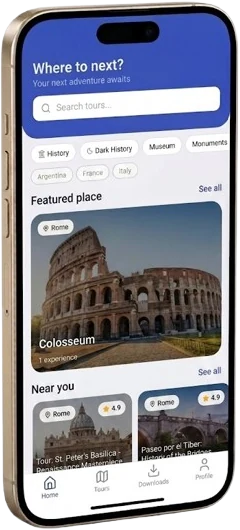
Trevurs has three free, self-guided audio tours in Venice that work offline, so you don't need data in the calli: Venice: 1,100 Years of a Republic Without a King or Mainland, Dark Venice: Spies, Informers and the Council of Ten and Venice: Seven Centuries of Masks in the Republic That Regulated Anonymity. Download them before you arrive, walk them at your own pace, and use the quiet hours to see a Venice most visitors miss.